


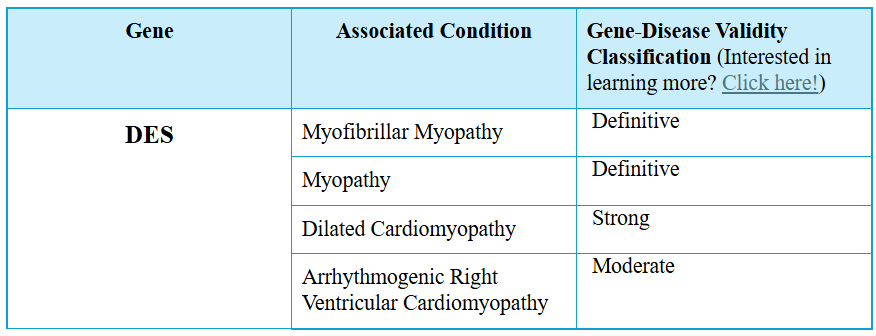
Pathogenic variants in the DES gene cause a spectrum of inherited myopathies and cardiomyopathies with significant clinical variability. The conditions include dilated cardiomyopathy, arrhythmogenic right ventricular cardiomyopathy, and myofibrillar myopathy, inherited in autosomal dominant or recessive patterns. Early identification through genetic screening enables clinical management of these serious cardiac and muscle disorders.
Key points
- The DES gene encodes desmin protein located on chromosome 2q35. The gene contains 9 coding exons and pathogenic variants cause multiple types of inherited myopathies affecting the heart and skeletal muscles.
- DES-related dilated cardiomyopathy presents with ventricular dilation and reduced systolic function. Patients typically develop heart failure with congestion, arrhythmias, conduction system disease, and thromboembolic complications including stroke.
- DES-related arrhythmogenic right ventricular cardiomyopathy involves fibrofatty replacement of cardiomyocytes. This fibrosis primarily affects the right ventricle, leading to ventricular arrhythmias, progressive dysfunction, and sudden cardiac death.
- DES-related myofibrillar myopathy causes progressive weakness of proximal and distal muscles. Patients experience "respiratory insufficiency cardiomyopathy cardiac conduction defects," with significant clinical variability even within families.
- Autosomal recessive DES cases present with earlier disease onset than dominant forms. De novo occurrences have been reported in autosomal dominant myofibrillar myopathy, reflecting the diverse inheritance mechanisms.
- Disease mechanisms differ between inheritance patterns in DES-related myopathies. Autosomal dominant cases involve dominant negative effects, while autosomal recessive cases result from biallelic loss of function.
Summarized by MalakyeAI