


From Daily Filter Changes To $585K in Savings: How the Right Seamer Oil Solved A Bacterial Crisis
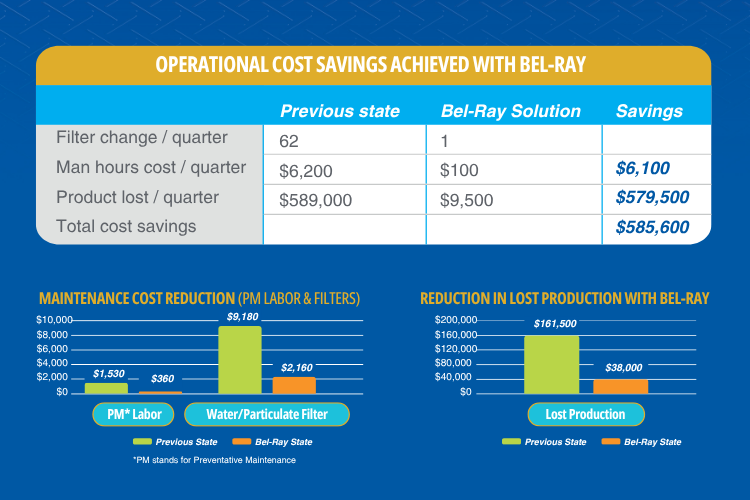
A major beverage processing plant faced a severe bacterial outbreak in its high-speed can-seaming machinery that forced daily filter changes and halted production. When standard suppliers couldn't solve the problem, switching to a specialized seamer oil restored operational efficiency. The plant recovered 2,500 daily cases of lost production and saved $585,600.
Key points
- Bacterial contamination caused filters to clog daily instead of quarterly. The plant's maintenance team was forced into unscheduled downtime, losing 2,500 cases of production per day due to rapid bacterial growth in the seamer housing.
- Can-seaming oils must meet strict food safety regulations and certifications. Seamer lubricants require NSF H1 registration, FDA compliance, and certifications including Kosher, Pareve, Halal, and ISO 21469 to ensure product safety in food and beverage operations.
- Harsh processing environments contaminate lubricants with water, chemicals, and food residue. These contaminants cause foaming, viscosity changes, corrosion, and "the growth of bacteria, yeast, mold, and other microorganisms" that create biofilm and lubricant degradation.
- Bel-Ray No-Tox Seamer Oil 150 contains biocide to prevent bacterial growth. The lubricant is formulated with USP white mineral oils and food-grade additives specifically engineered for moisture-heavy can-seaming environments.
- Filter replacement cycle returned to normal within six months of switching oils. The plant successfully restored its once-quarterly preventive maintenance schedule after implementing the new seamer oil.
- The solution eliminated daily maintenance interventions and recovered lost production volume. The plant regained 2,500 cases daily in production capacity, generating $585,600 in total savings.
Summarized by MalakyeAI