


Bulk Moisture-Wicking Shirts: 2026 Buyer’s Guide
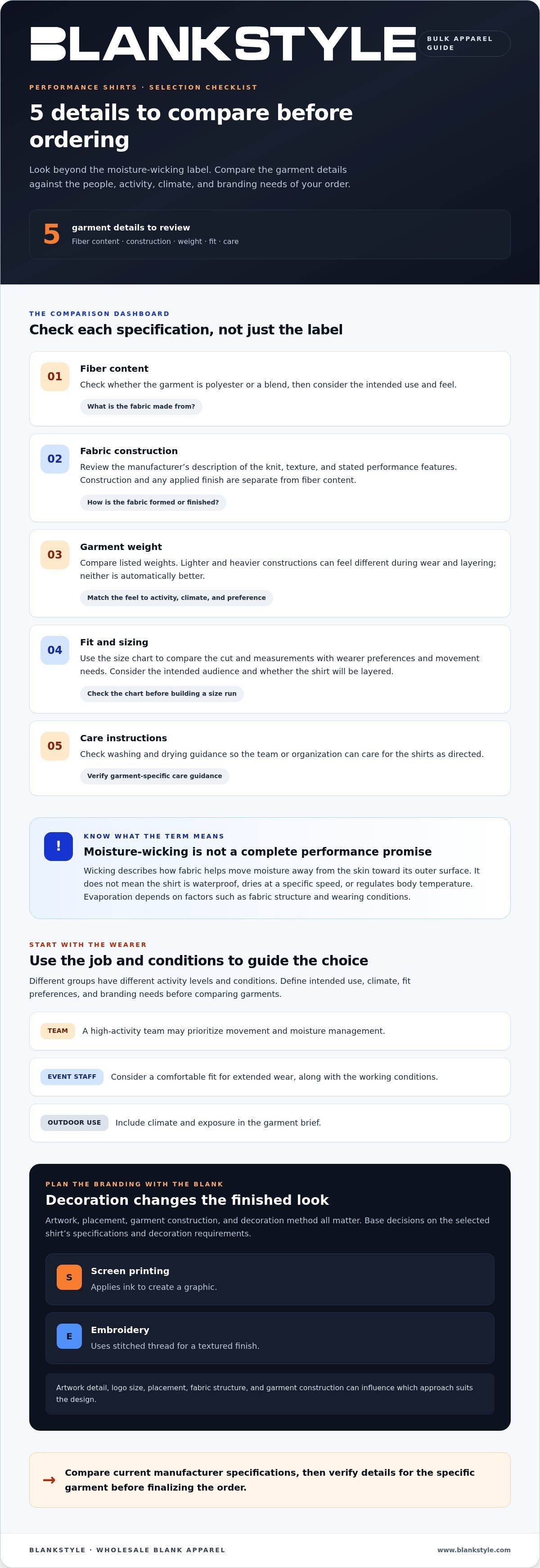
Sourcing moisture-wicking shirts in bulk requires more than selecting a performance label. Buyers must compare fabric construction, fit, garment weight, and decoration compatibility to ensure the finished order suits its intended use. Planning these details together—rather than treating the shirt, sizing, and branding separately—creates consistency across teams, events, and staff programs.
Key points
- Define the shirt's intended use before comparing garments. Different activities and climates require different performance features, so "start with the wearer and the job the shirt needs to do."
- Moisture-wicking describes fabric construction, not speed or waterproofing. The term indicates how fabric moves moisture away from skin, but evaporation depends on construction, fiber content, and wearing conditions.
- Compare fiber content, construction, weight, fit, and care instructions as separate details. Each element affects comfort and consistency; polyester alone does not guarantee moisture management performance.
- Plan decoration method and placement alongside garment specifications. Screen printing and embroidery produce different results on different fabrics, so artwork and placement decisions should be based on the selected shirt's documented properties.
- Build a complete order brief documenting garment, size run, colors, artwork, and fulfillment requirements. This approach keeps project details organized and makes repeat orders easier to plan and track.
- Review manufacturer specifications and care guidance for the specific garment. Avoid assuming all performance fabrics behave identically; use product-specific documentation to guide decisions about sizing, decoration, and maintenance.
Summarized by MalakyeAI