


Drop Shipping Guide for Apparel Brands in 2026
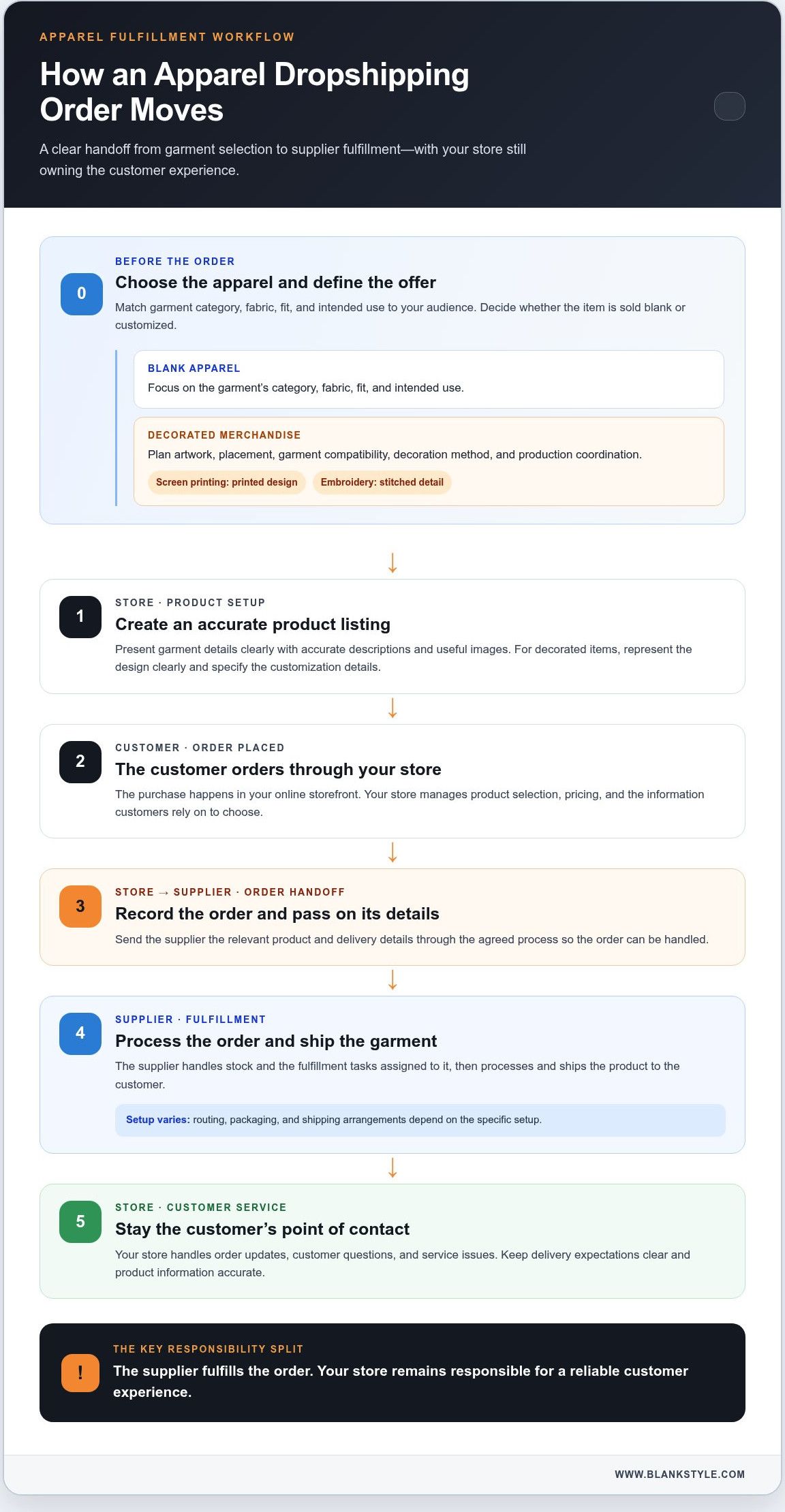
Apparel dropshipping allows sellers to offer garments without holding inventory, shifting focus to product selection and customer experience. However, removing stock doesn't eliminate the need to understand sourcing, order handling, and fulfillment responsibilities. Success requires clear workflows, accurate product information, and consistent customer communication throughout the buying process.
Key points
- Dropshipping lets apparel sellers avoid holding inventory while maintaining brand control. The seller manages product selection, pricing, and customer communication, while a supplier handles stock and fulfillment tasks assigned to them.
- Sellers must match garments to their audience based on fabric, fit, and intended use. Accurate product descriptions and images set proper expectations before purchase, whether selling blank apparel or decorated merchandise.
- Sellers choose between broad marketplace platforms or product-focused apparel suppliers based on priorities. "The best fit depends on your priorities," with apparel-focused suppliers offering greater relevance for garment-centered businesses.
- Effective workflows require documenting order responsibilities before launch. Sellers should map how orders move from storefront to supplier, identify who monitors status, and avoid promising fulfillment steps the workflow doesn't establish.
- Clear product information and post-purchase communication remain seller responsibilities. Mismatches between listings and received items affect customer trust regardless of who handled the package.
- Apparel businesses can offer both blank and decorated items through dropshipping solutions. Decorated products require attention to artwork, placement, and decoration method, with screen printing and embroidery as common customization options.
Summarized by MalakyeAI