


Side-Seamed vs. Tubular T-Shirts: Pros, Cons, and How to Choose
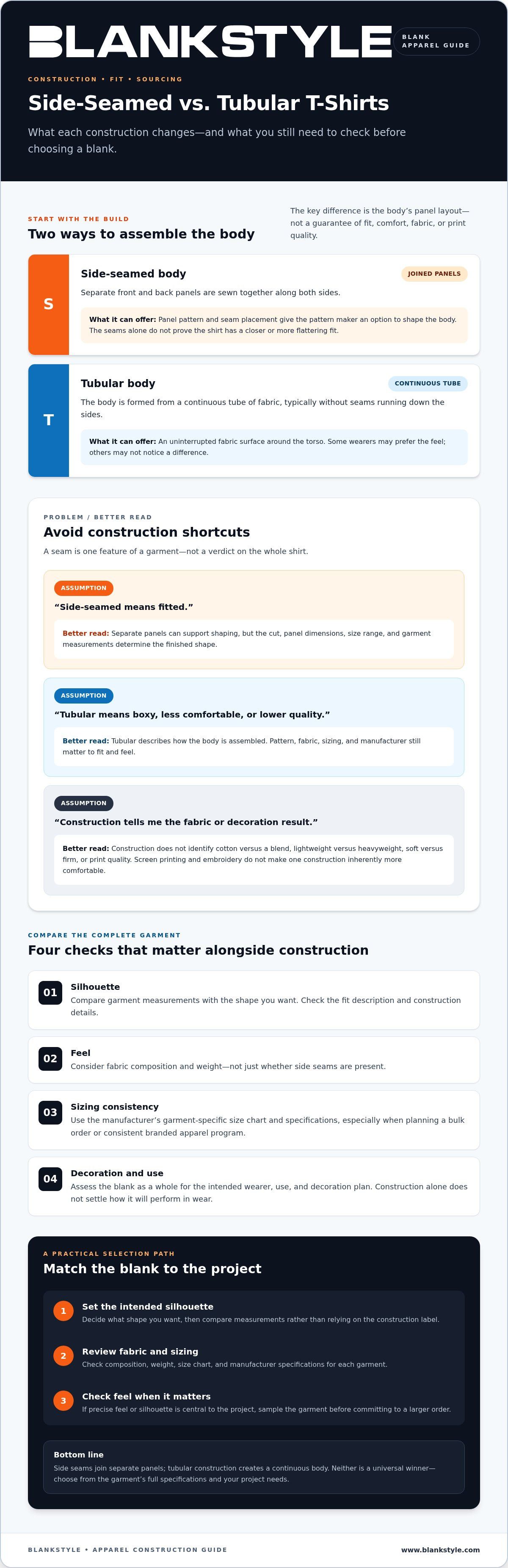
T-shirt construction—side-seamed versus tubular—affects garment assembly and potential fit, but neither approach automatically delivers superior comfort or quality. The choice depends on your intended silhouette, intended wearer, and decoration plan rather than construction alone. Fabric, sizing, pattern, and manufacturer specifications shape the finished garment's feel and performance.
Key points
- Side-seamed shirts use separate front and back panels joined at the sides. This construction method allows pattern makers to shape body panels independently, though the finished fit still depends on the complete pattern and sizing details.
- Tubular construction creates a continuous fabric tube without side seams along the torso. "The tube itself doesn't specify the finished fit; cut, sizing, and fabric still shape the garment," and comfort depends on more than the absence of seams.
- Construction is separate from fabric choice and quality indicators. Neither side seams nor tubular bodies tell you whether a shirt is cotton, a blend, lightweight, or heavyweight—those qualities depend on fiber content and fabric specifications.
- Garment measurements matter more than construction labels for fit decisions. Compare manufacturer size charts and specific measurements across candidate blanks rather than assuming construction alone determines whether a shirt will fit your intended audience.
- Artwork placement and decoration success depend on garment details, not construction type. Review design placement in relation to body panels and seams, as neither construction guarantees superior screen-printing or embroidery results.
- Document complete specifications for consistent repeat orders and sourcing decisions. Recording construction, fit measurements, fabric details, and decoration requirements helps teams compare blanks accurately across future orders without relying on assumptions.
Summarized by MalakyeAI