


“Why Are Stores Closing Fitting Rooms?” by Bob Phibbs via The Retail Doctor Blog
By Board Retailers Association
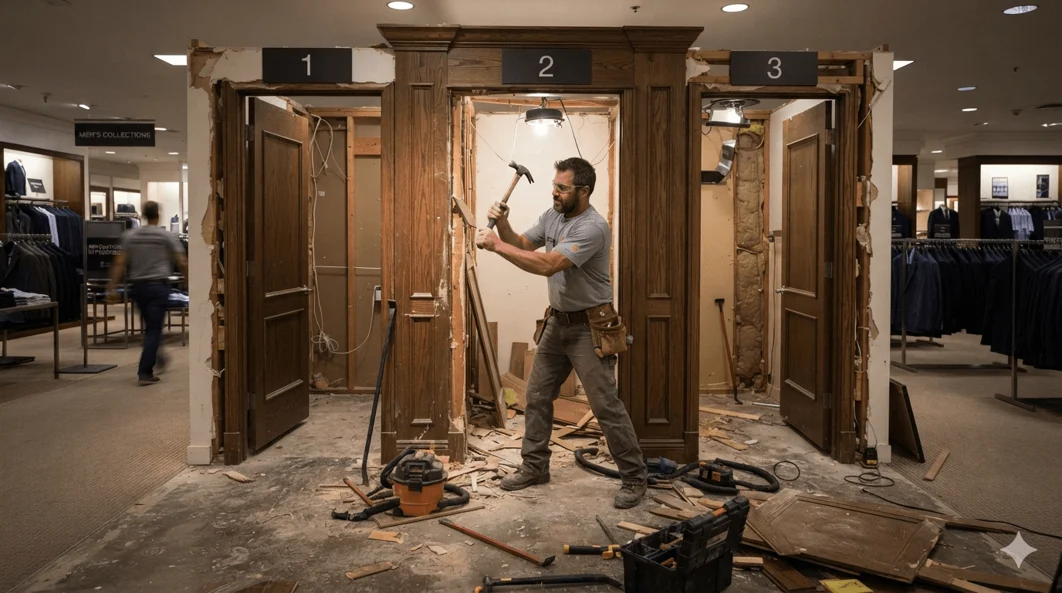
Four major retailers have closed fitting rooms in the last three years, citing different reasons that reveal a gap between public and private justifications. Brandy Melville, Sainsbury's, Goodwill locations, and others have shuttered changing areas, with theft commonly blamed publicly while labor costs emerge as the underlying driver. Data shows internal shrink accounts for two-thirds of retail losses, challenging the theft narrative.
Key points
- Brandy Melville closed fitting rooms at 55-plus US stores without explanation. The company directed employees to shut them permanently in June 2026, covering the US, UK, and Canada, yet never issued a public statement about the decision.
- Theft receives public blame while staffing costs drive decisions. Goodwill Industries of the Valleys explicitly cited labor expenses on its FAQ, stating the organization lacks resources to maintain fitting rooms, yet other companies blame shoplifting without mentioning staffing pressures.
- Internal shrink accounts for roughly 63 percent of retail loss. The National Retail Federation's own survey shows external theft combined accounts for only 36 percent, contradicting the widely publicized claim that organized retail crime caused nearly half of shrink.
- The reported vandalism at Brandy Melville revealed a broken system. Customers used chewing gum to hold curtains closed because they would not stay shut, prompting the company to remove fitting rooms entirely rather than repair the infrastructure.
- Gen Z customers strongly prefer in-store shopping with fitting rooms. According to Coresight Research CEO Deborah Weinswig, "75 percent shop in store to confirm fit" and 78 percent prefer buying in-store to see and feel products.
- Zara and luxury retailers are upgrading fitting rooms rather than closing them. Zara rebuilt changing areas with individual wood-panelled rooms and staff alerts, finding that dedicated fitting room associates raised sales approximately 22.4 to 22.7 percent by reducing phantom stockouts.
Summarized by MalakyeAI