


Small Roofing Company Marketing Budget: 2026 Guide
By Bullseye Marketing Consultants
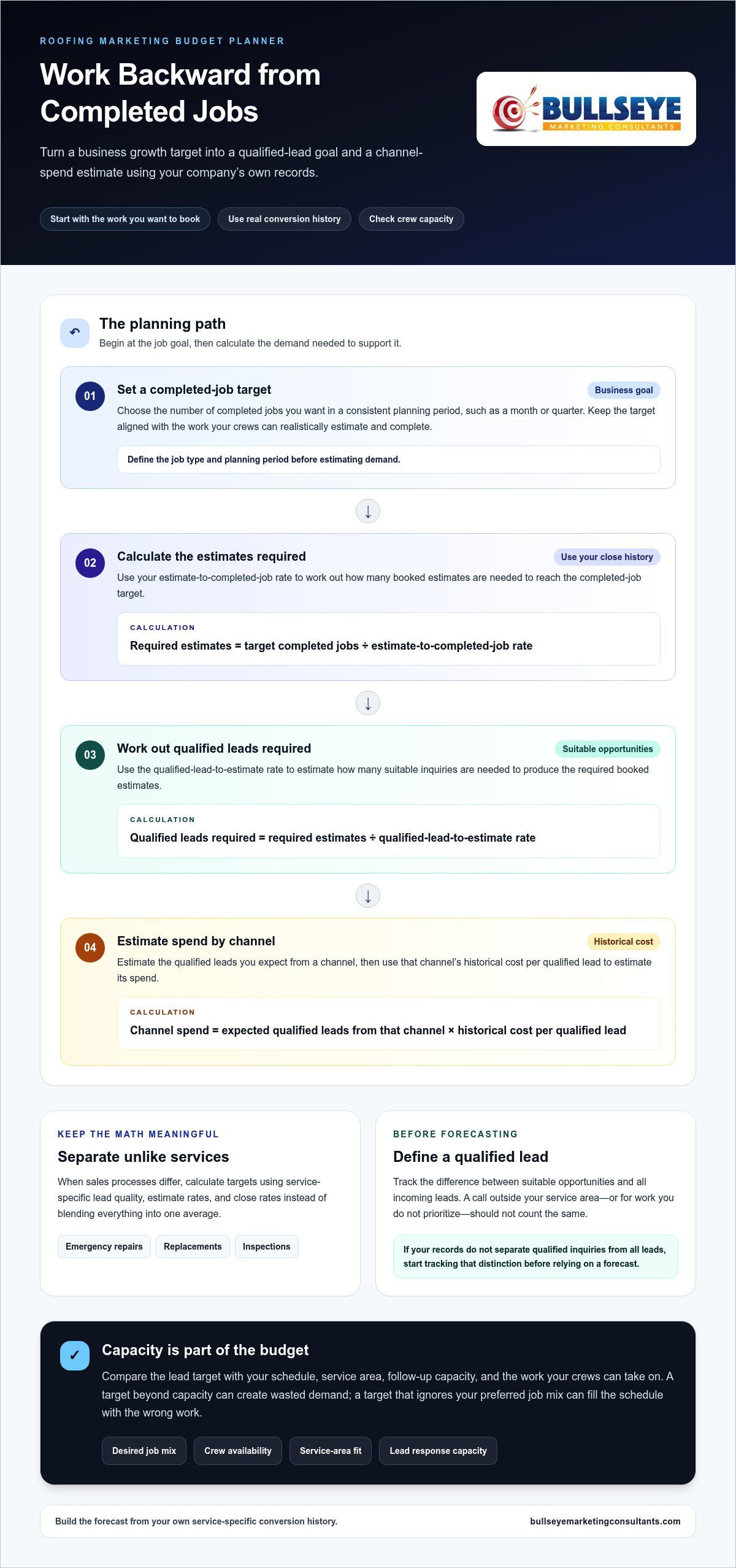
Small roofing companies should base marketing budgets on business goals and operational capacity rather than fixed revenue percentages. The approach involves working backward from desired completed jobs to calculate required leads, then comparing marketing channels by their ability to produce booked work. Tracking performance across the full customer journey—from inquiry through job completion—enables data-driven budget adjustments.
Key points
- Set budgets around jobs your crews can handle, not arbitrary percentages. A useful plan accounts for strategy, website improvements, content, measurement, and lead response alongside advertising spend.
- Work backward from completed jobs to estimate lead requirements. Divide target jobs by your estimate-to-completion rate and qualified-lead-to-estimate rate to determine how many leads each channel must produce.
- Compare channels by lead quality and business results, not just cost per click. Paid search, SEO, and website design serve different roles in reaching searchers and converting visits into action.
- Separate service types and locations in campaign planning and tracking. "Replacements are the priority, use replacement lead and sales history rather than blending those results with repair inquiries."
- Review monthly activity against plans by source, qualification, estimates booked, and completed jobs. Track whether inquiries match your service area and preferred work types before adjusting spending.
- Define qualified leads consistently and fix tracking gaps before cutting or increasing investment. A qualified lead meets your criteria for service type, location, and readiness; inconsistent labeling can distort channel performance assessment.
Summarized by MalakyeAI