


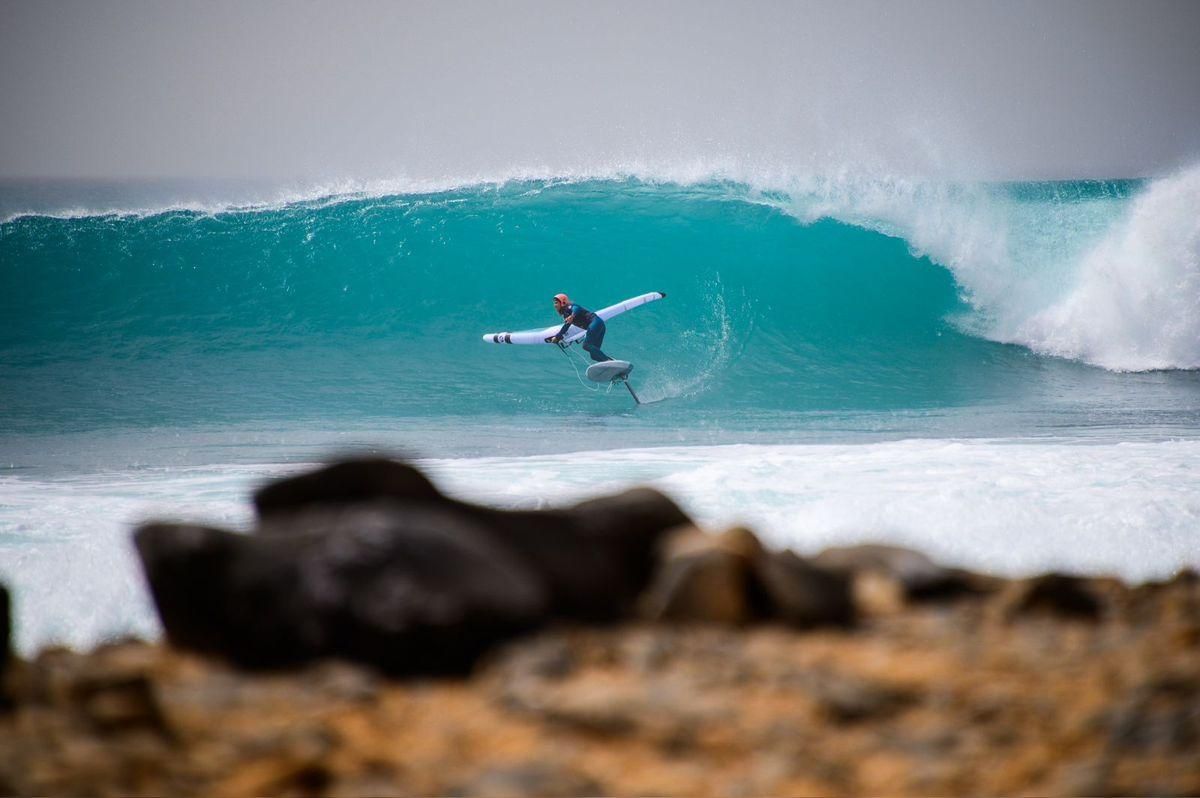
Cabrinha team rider Elena Moreno shares techniques for transitioning wing foiling from flat water to wave riding. The progression involves learning to harness wave energy while managing the wing, starting with small, clean waves and moderate wind. Proper positioning, smooth movements, and gradual skill-building are essential for safe wave foiling.
Key points
- Wave foiling allows riders to use wave energy instead of wing power. The key is learning to let the wave provide propulsion while keeping the wing under control.
- Start in small, clean waves with moderate wind conditions. Build speed with the wing before the wave pushes you, then grab the neutral handle and allow the wing to flag out so you can focus on riding.
- Common beginners' mistake is staying too far from the wave face. When positioned too far out, "you can lose speed because the wave isn't providing enough energy," potentially causing the foil to drop.
- Practice transitioning between powered and neutral positions on flat water first. Build speed, grab the neutral handle to flag the wing, then quickly return to powered riding before the foil drops, repeating until the movement feels natural.
- Avoid riding too deep into the wave too early in progression. A large, stable foil can accelerate quickly when receiving wave energy, potentially launching you upward; instead, move toward the wave face progressively and pay attention to foil reactions.
- Transition to a smaller foil once comfortable riding deeper into waves. A smaller foil handles more speed and energy while providing responsive, controlled rides, but "developing good control on a larger, more stable foil first will give you a solid foundation."
Summarized by MalakyeAI