


Do aerodynamics matter for hill climbing? Andrew Feather’s 2026 hill climb bike features huge positional changes in the pursuit of aero
By road.cc
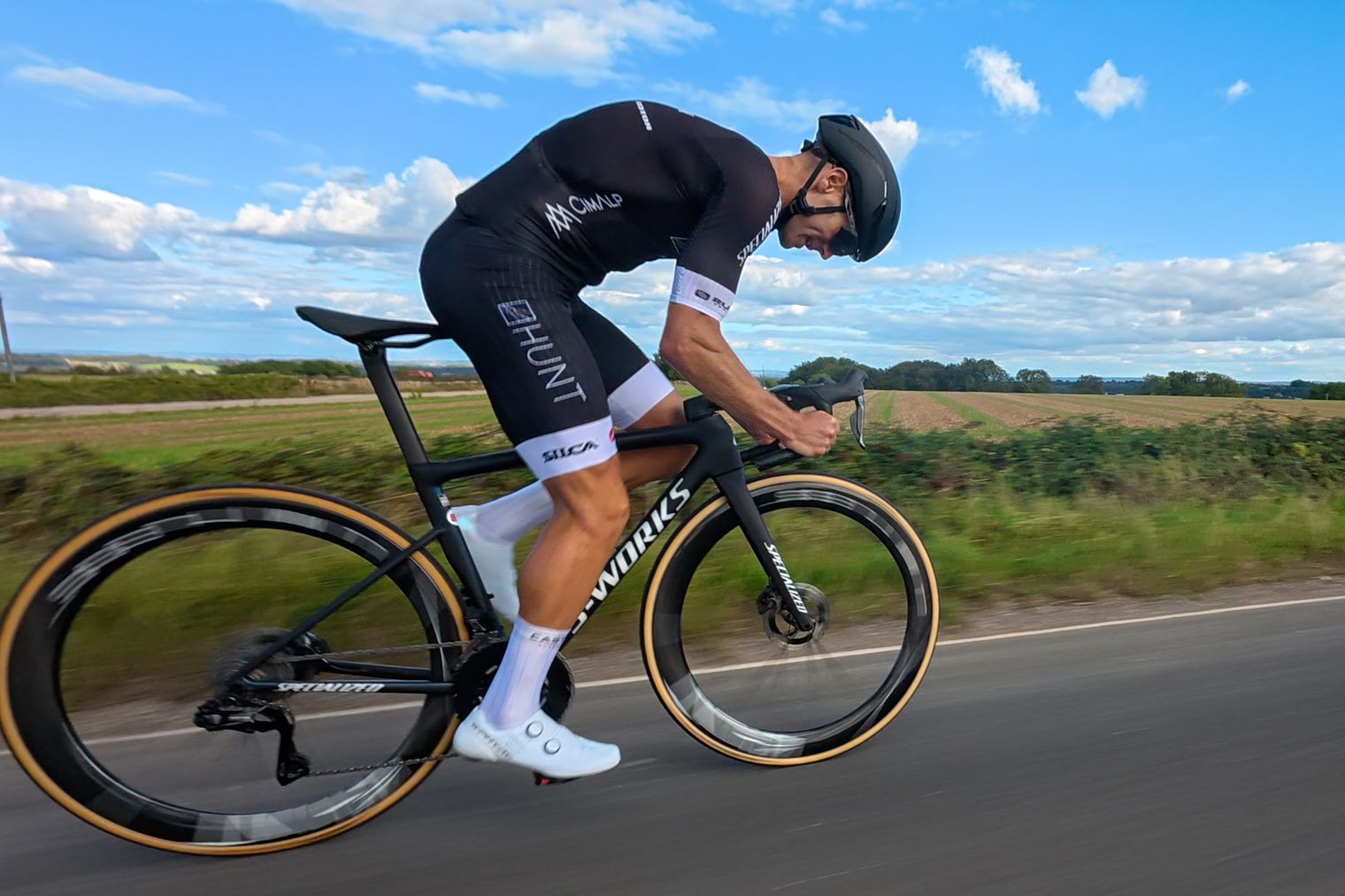
Multiple-time national hill climb champion Andrew Feather is pursuing aerodynamic gains for the 2026 season on Porlock Toll Road, a long, shallow climb requiring sustained speed. Working with aerodynamics coach Dr Xavier Disley, Feather has made radical positional changes to his bike setup, moving away from the lightweight-focused philosophy that traditionally dominated British hill climbing.
Key points
- Feather lowered his front end 5cm and extended his reach 6cm. Working with AeroCoach since January, these significant position changes represent a departure from his previously upright climbing posture on a smaller 52cm frame.
- The Nationals course demands speed over extreme lightness. Porlock Toll Road's 6.2km length at 5.2% gradient allows 30km/h average speeds, as demonstrated by Ed Laverack's Strava KOM of 13:20.
- Feather narrowed his handlebar width by 10cm to 32cm. The AeroCoach Ornix bar supports his more aggressive aerodynamic positioning and allows him to maintain power output in the new setup.
- Hunt Limitless wheels replaced his previous lightweight tubular design. The 5AM wheelset offers better aerodynamics than his former Hill Climb SL wheels, which weighed just 963g for the pair.
- Feather switched to tubeless Vittoria Corsa Pro Speed tyres in 28mm. This represents "a radical change" from his previous setup, as the narrow 28mm size fits the maximum width allowed within ETRTO guidelines for his 23mm rim width.
- His drivetrain configuration remains flexible for race day. Currently using a 2x Shimano Dura-Ace Di2 setup, Feather is considering a 1x configuration as an alternative option.
Summarized by MalakyeAI