


The Content System Maturity Model: 7 Stages From Informal to Intelligent
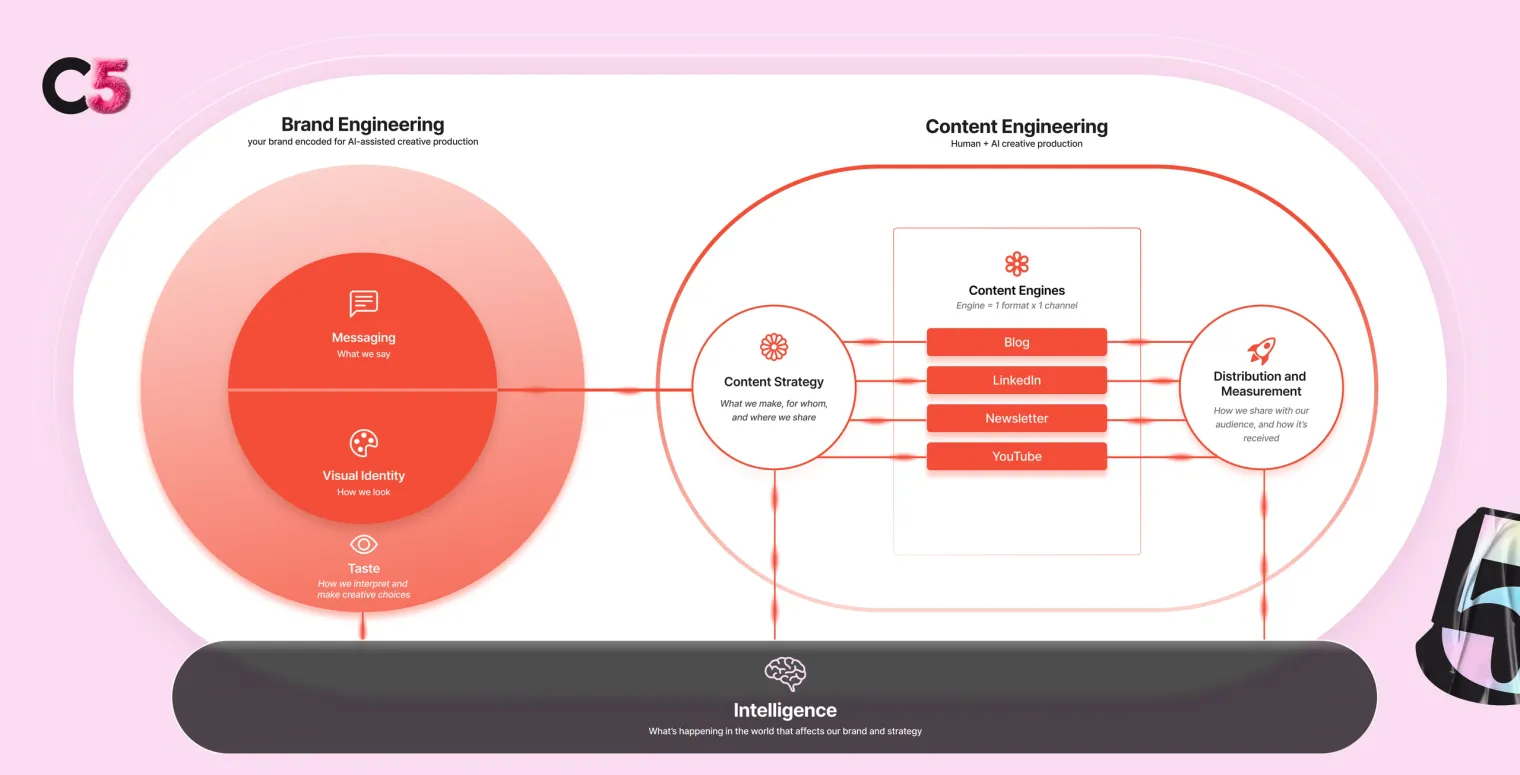
Most B2B marketers struggle to scale their brand consistently across channels and tools. A content maturity model maps how well a brand is encoded and how portable that encoding is, progressing from informal knowledge in team heads to intelligent systems that learn from performance. The framework provides seven stages that help organizations identify where they stand and what advancement requires.
Key points
- A content system comprises people, tools, and processes that produce on-brand content reliably. It splits into brand engineering—encoding the brand so it travels—and content engines that execute it at scale.
- Only 12 percent of Fortune 1000 companies rate their content operations at top maturity tiers. According to AIIM research, the majority of organizations sit near the bottom of the maturity ladder, struggling with consistency and scale.
- Brand consistency across channels can lift revenue by roughly 23 percent. AI-powered tools create "brand drift" by pulling writing toward statistical averages, making encoded consistency especially valuable in the AI era.
- The seven maturity stages climb from Informal through Intelligent in sequential order. Each stage builds on the previous: Documented, Encoded, Taste-informed, Portable, Operational, and Intelligent, with each rung assuming the one below is solid.
- Most teams land at stages two or three, documented but partly encoded and stuck. The fastest path forward involves encoding anti-patterns first, then brand claims with approval status, then core narratives.
- Portability means the brand becomes a governance layer accessible to any tool or agent through versioned connections. This converts encoded documents into "a brand that travels with the work" rather than living as a forgotten link.
Summarized by MalakyeAI