


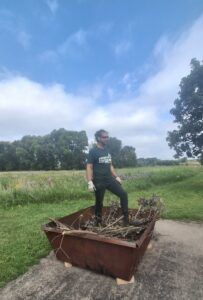
Invasive buckthorn is being converted into biochar at Riverbend Nature Reserve through a process that sequesters carbon and restores degraded soil. AmeriCorps volunteers cut buckthorn and fed it to kilns operating in low-oxygen environments to create the carbon-rich material. The resulting biochar improves water retention and reduces erosion while sequestering carbon that would otherwise enter the atmosphere.
Key points
- Buckthorn is an invasive European species degrading native ecosystems. The shrub outcompetes native plants, destroys wildlife habitat, and causes erosion by blocking sunlight from reaching other vegetation.
- Biochar is created by heating buckthorn in low-oxygen kilns. This process converts the woody material into a substance that is 50 to 90 percent carbon with minimal nitrogen content.
- Biochar improves soil health and climate resilience. The material increases water-holding capacity and infiltration rates, reducing vulnerability to droughts and floods while building soil structure.
- Carbon sequestration occurs when biochar is applied to soil. According to the article, biochar "rapidly sequesters carbon below ground and keeps it there, thanks to its resistance to decomposition."
- Kiln technology prevents emissions from traditional burn piles. The flame cap design contains ash inside, eliminating the atmospheric emissions that would result from open burning of invasive vegetation.
- Riverbend uses biochar for ecological restoration projects. The organization applies biochar to soil amendments for tree and prairie restoration initiatives, creating what the author describes as "a full-circle moment" where invasive species help repair damaged ecosystems.
Summarized by MalakyeAI