


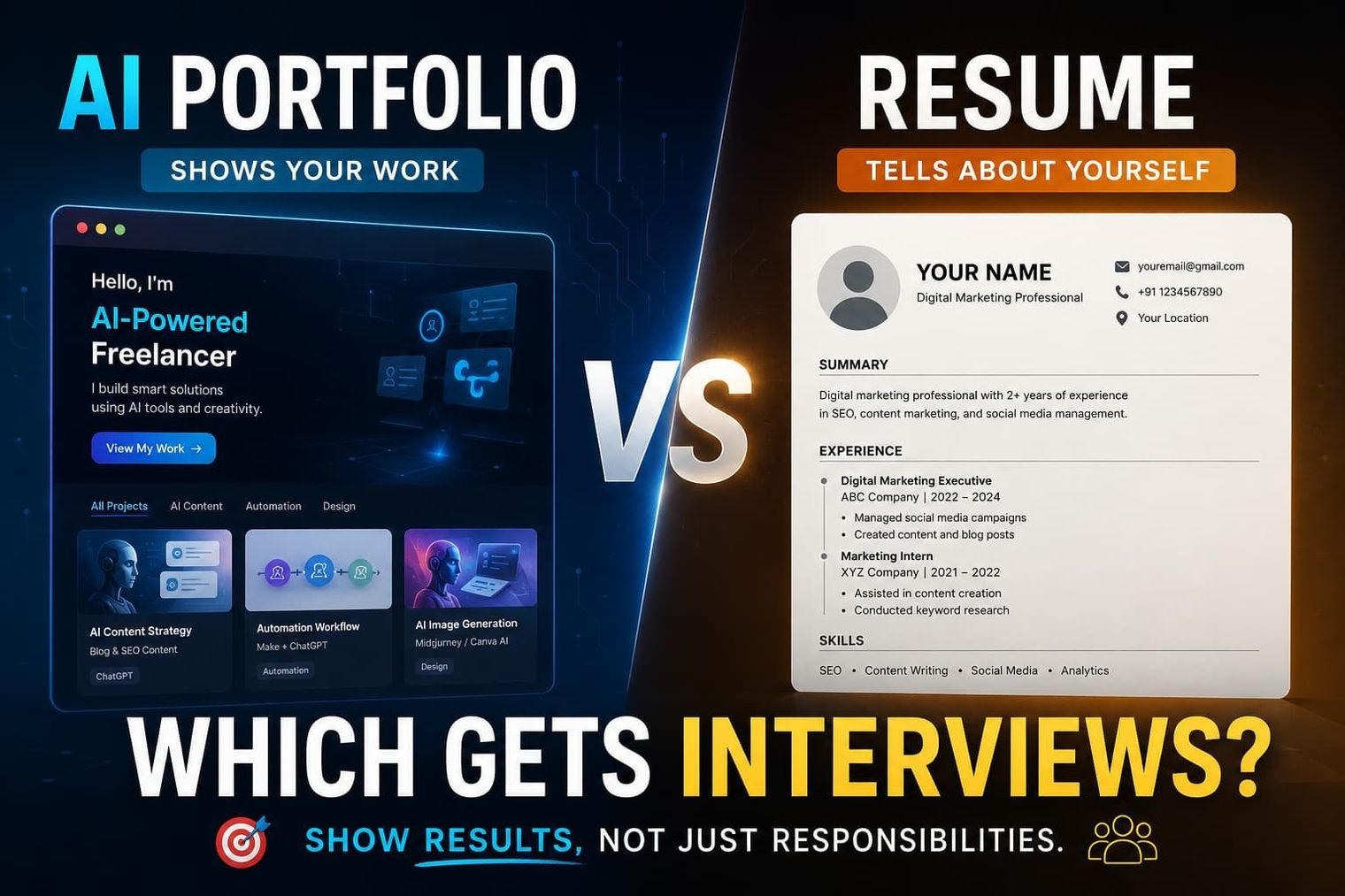
Job seekers in 2026 face a dual-track hiring system: resumes must pass automated screening, while portfolios convince human recruiters to call. The most successful candidates use both formats strategically. A keyword-optimized resume clears applicant tracking systems, but an AI-generated portfolio demonstrating real work outcomes drives interview callbacks.
Key points
- Resumes survive the first filter by matching ATS keyword requirements. Most large employers scan applications through automated systems before human review, making proper formatting and skill keywords non-negotiable for initial consideration.
- AI portfolios outperform resumes in securing actual interviews. Recruiters report that "a resume gets you considered, but a portfolio gets you remembered" because it shows finished work instead of merely claiming skills.
- The two formats serve completely different purposes in hiring. ATS software cannot read portfolio links, so a resume failing to clear that filter means the portfolio never gets reviewed by a recruiter.
- Portfolio strength matters most in creative and technical fields. Design, development, writing, marketing, and data roles benefit significantly from portfolios, while positions like accounting or compliance require different evaluation criteria.
- Combining both formats produces the highest interview rates. Job seekers should maintain an ATS-safe resume with a portfolio link in the header and keep portfolios focused on three to six strongest projects for maximum impact.
- Portfolio quality matters more than quantity or AI generation alone. A generic or template-filled portfolio can harm chances more than having none, so finished projects demonstrating genuine work are essential for credibility.
Summarized by MalakyeAI