


Can an Adjustable Bed Help With Snoring? What Head Elevation Can and Can’t Do
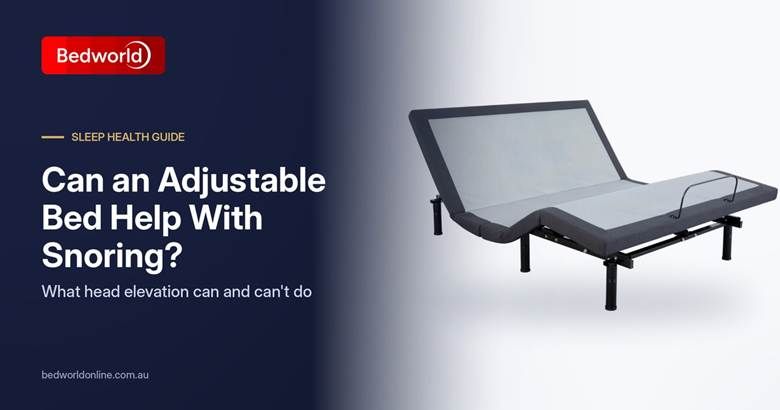
Snoring occurs when soft tissue vibrates as air moves through a narrowed airway during sleep. Adjustable beds with head elevation can reduce snoring for some people, particularly back sleepers, by preventing the tongue and soft palate from collapsing backward. However, elevation has significant limitations and cannot address all snoring causes or replace medical treatment for sleep apnea.
Key points
- Snoring happens when throat muscles relax and airway narrows during sleep. Gravity pulls the tongue and soft palate backward when lying flat on the back, which is why "many people snore loudest on their back and more quietly on their side."
- Head elevation changes how gravity affects the airway. An adjustable base raises the entire upper body in a straight line, which is more effective than stacked pillows that bend the neck forward and can actually narrow the airway.
- Research shows modest head elevation reduces breathing interruptions. Studies found that raising the head by 7.5 degrees reduced obstructive sleep apnea severity, and elevating to 30 degrees reduced soft palate collapse in some patients.
- Anti-snore presets provide consistency without adjustment. These one-touch settings raise the head a small amount each night, eliminating the need to fiddle with remotes in darkness.
- Head elevation cannot fix certain snoring causes. It won't help with snoring caused by nasal blockage, won't offset the effects of alcohol before bed, and isn't a treatment for moderate or severe sleep apnea.
- Medical consultation is necessary for serious symptoms. See a doctor if you experience "pauses in breathing, choking or gasping during sleep" or persistent daytime sleepiness, as these indicate possible sleep apnea requiring proper diagnosis and treatment.
Summarized by MalakyeAI