


Mirrors for the Modern UTV: RZR, Maverick, H2, and more
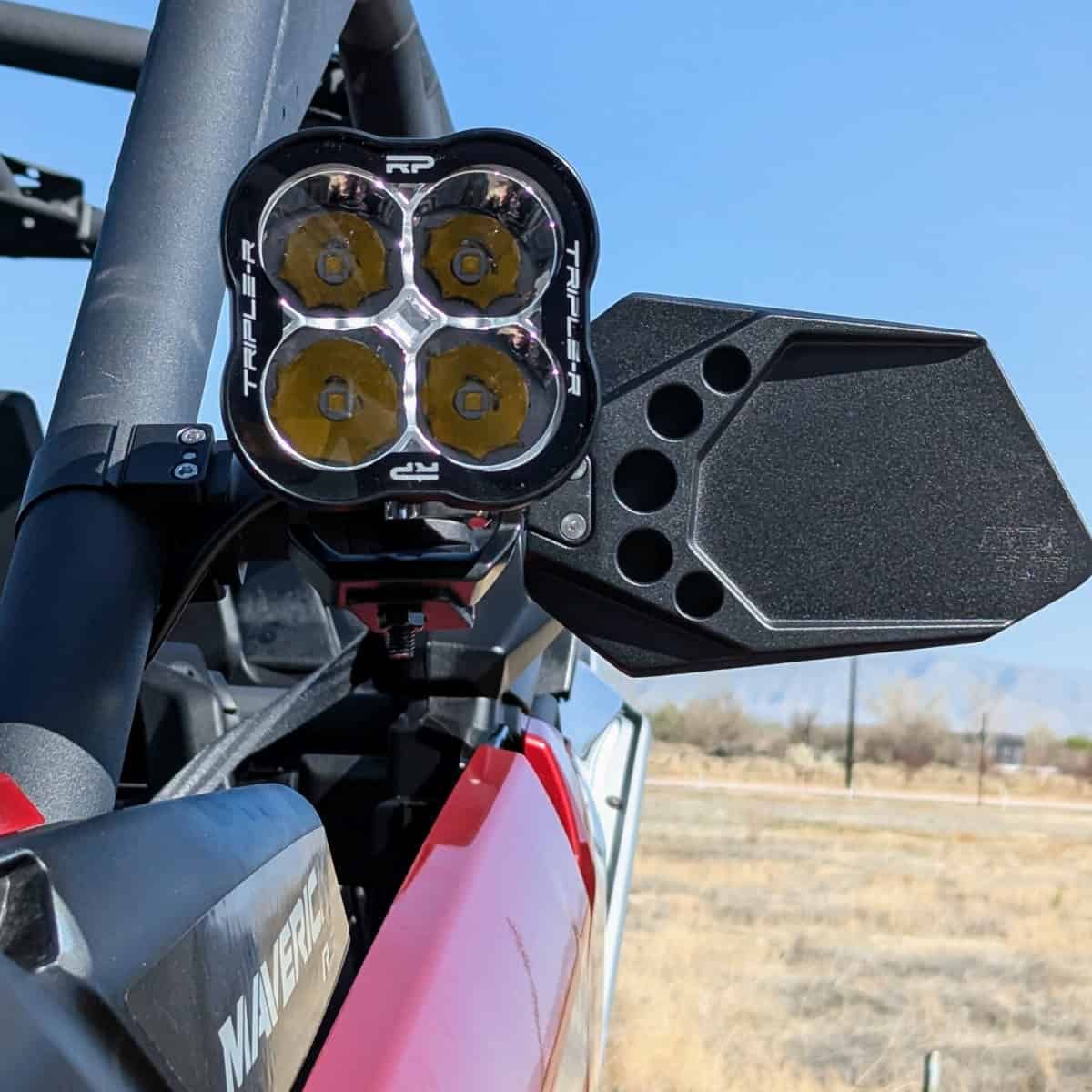
Modern sport UTVs are becoming faster and wider, but their A-pillar design creates visibility challenges for drivers. Mirror placement, size, and mounting design work together to determine actual rearward visibility rather than any single factor alone. This article explains the engineering principles behind effective UTV mirror selection across major platforms.
Key points
- Mirror placement matters more than fitting snugly against the cage. A mirror mounted tightly against the cage can leave part of its view blocked, so moving the reflective surface outward improves the driver's viewing angle.
- Larger mirrors provide more usable terrain visibility from the same position. The larger reflective area shows more of what is happening beside and behind the machine while still keeping part of the vehicle visible as a reference point.
- Extending mirrors outward creates leverage challenges for mounting systems. As weight moves farther from the cage, bumps gain more leverage, meaning longer mirror arms require stronger structural support than simple ball-joint tension alone.
- Adding pod lights increases leverage and load on the mounting system significantly. Many conventional systems place several responsibilities on one adjustment joint, but splitting the load path allows different components to handle different structural jobs.
- Mechanically indexed surfaces prevent mirror rotation better than friction alone. Mirror-01 uses teeth that physically engage each other, meaning "the system doesn't depend only on friction to resist movement," providing superior position retention.
- Physical installation verification matters more than theoretical compatibility claims. Real fitment photos across RZR, Maverick, KRX, H2, Talon, Z10, Villain, and Wolverine RMAX platforms show exactly how mirrors position on each machine.
Summarized by MalakyeAI