


Fitbit Air vs Whoop: The Verdict Four Months After Google Went After the Subscription Model
By Memeburn
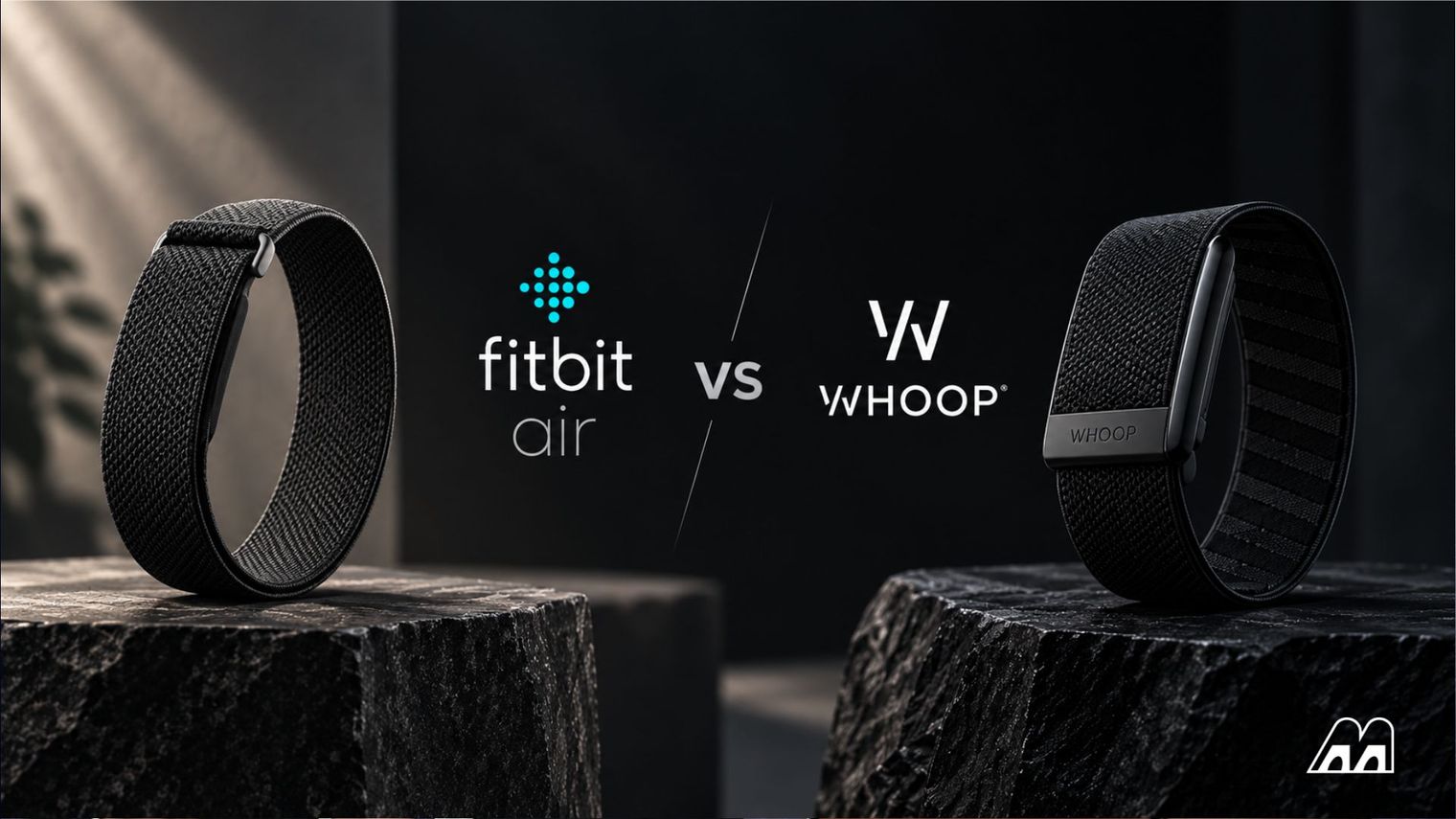
Google's Fitbit Air has emerged as a major challenger to Whoop after four months of real-world testing. The $99 screenless tracker requires no subscription, while Whoop's membership model costs $199-$359 annually. Independent heart-rate testing showed negligible differences between the two devices, shifting the comparison from accuracy to cost and feature depth.
Key points
- Fitbit Air costs $99 with no ongoing subscription fees required. The device includes optical heart rate, SpO2 sensors, skin temperature monitoring, and FDA-cleared AFib detection in a 5.2-gram form factor.
- Whoop operates as a subscription service rather than a hardware purchase. "You do not buy a Whoop. You rent one," with Whoop One starting at $199 annually, Peak at $239, and Life at $359 for advanced features.
- Independent testing found heart-rate accuracy differences under 1.5 beats per minute between devices. On a two-hour ride, the $99 Fitbit matched chest-strap readings while Whoop's more expensive model performed similarly.
- Google Health Premium at $9.99 monthly gates advanced coaching features on Fitbit Air. However, the subscription is included free with Google's AI Pro or Ultra plans, potentially eliminating additional costs for existing subscribers.
- Whoop abandoned price competition and pivoted toward healthcare provider partnerships instead. The company announced Medicare model selection, advanced lab panels, and physician services rather than reducing sticker prices.
- Google's $99 pricing strategy serves as customer acquisition for its health platform. The low device cost drives biometric data collection into Google Health, which consolidates data from Apple Watch and Oura as Google Fit retires.
Summarized by MalakyeAI