


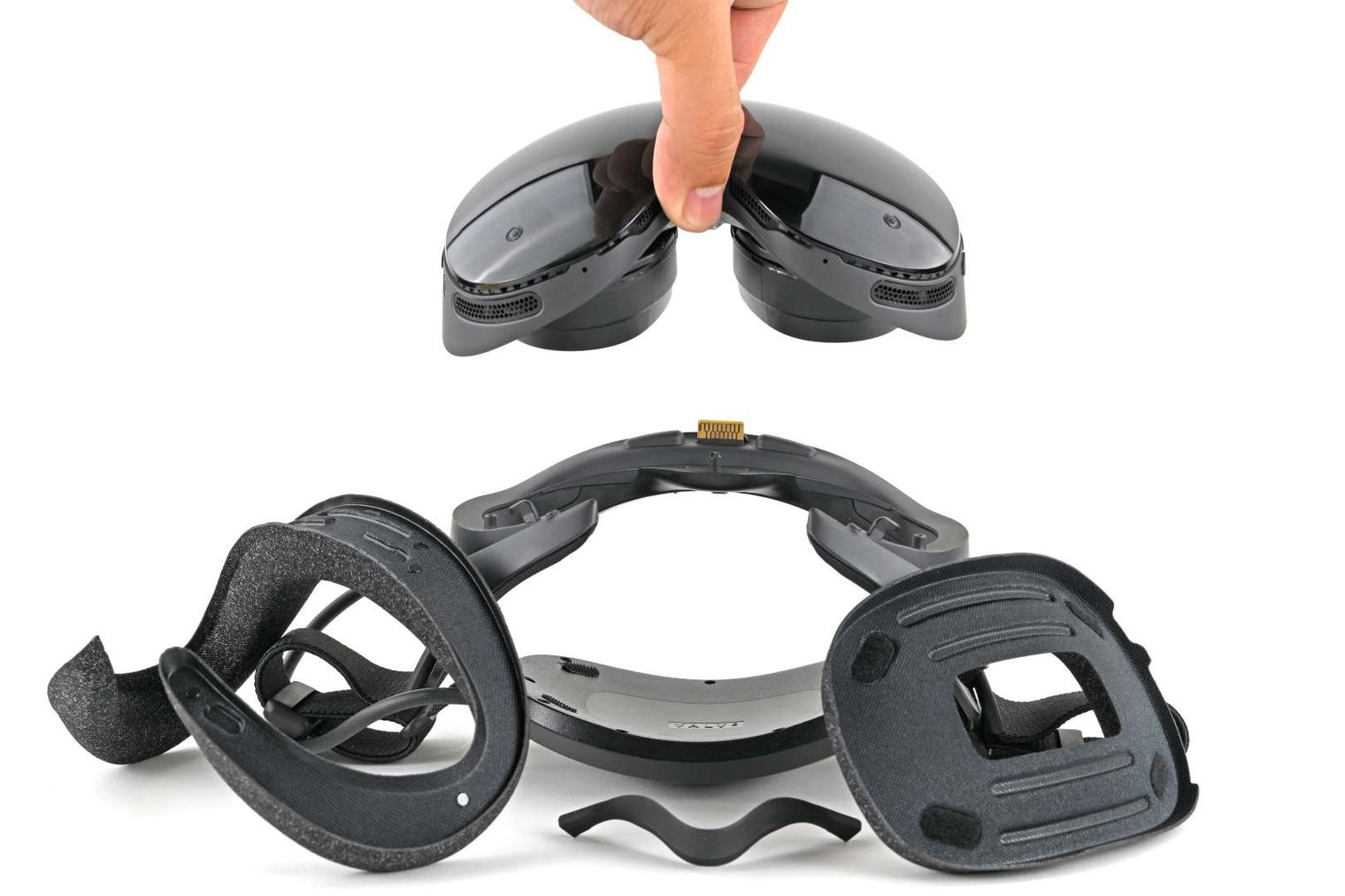
Valve has released the Steam Frame, an all-in-one wearable PC that fulfills a five-year-old promise to deliver untethered VR gaming. The device combines dedicated virtual reality experiences with access to the full Steam library without requiring external base stations or cables. Early teardown analysis reveals both impressive engineering and notable design compromises.
Key points
- Steam Frame delivers untethered VR gaming without external hardware requirements. The all-in-one wearable PC eliminates the need for base stations or tether cables that plagued previous VR systems.
- The device supports both dedicated VR titles and traditional Steam games. Players can access their existing Steam libraries directly on the wearable platform without additional setup or conversion.
- Internal engineering demonstrates sophisticated integration of multiple components. The teardown reveals Valve's approach to packaging processing power, display technology, and tracking systems into a wearable form factor.
- Cooling and thermal management present significant engineering challenges. The concentrated processing power in a headset-mounted device requires advanced heat dissipation solutions to maintain performance during extended gaming sessions.
- Battery life and power efficiency remain critical considerations for portability. As a wearable all-in-one system, the Steam Frame must balance performance demands with practical usage duration for users.
- Fan noise during operation emerges as a notable design concern. The thermal requirements of the system result in audible fan operation that reviewers found distracting during gameplay.
Summarized by MalakyeAI