


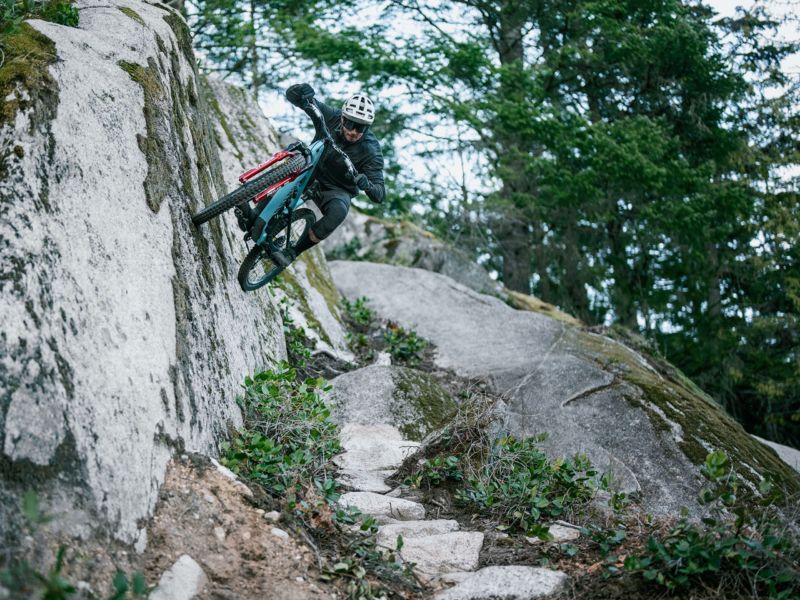
Mountain biker Braydon Bringhurst undertakes a three-day project to climb and descend Gouranga, a notoriously difficult double black-diamond trail in Squamish, British Columbia. The 37-year-old approaches the challenge with meticulous preparation, breaking complex movements into mental cues to maintain focus and manage risk. Despite tearing a quad muscle after 122 total attempts, Bringhurst views the incomplete project as valuable learning rather than failure.
Key points
- Braydon Bringhurst is a discipline-defying mountain biker with unusual athletic versatility. His résumé includes national BMX titles, a 2006 USASA freeski championship, and a pole-vaulting state record, yet he avoids traditional competition formats in mountain biking.
- Mental focus through "steps of execution" eliminates doubt during high-consequence rides. He repeats two or three specific cues to himself, explaining that "the conscious mind is literally a space" and filling it prevents fear from entering.
- Meticulous preparation underpins Bringhurst's approach to complex trails. He walked Gouranga's line dozens of times, measured features, built replicas at home, and tested tire pressures and suspension settings before attempting the climb.
- Bringhurst worked with a sports psychologist for 14 years to develop mental strategies. He applies research on attention capacity and Hick's Law—which states more options slow physical reaction—to stay in a flow state during technical riding.
- He embraces failure as essential data rather than defeat. After tearing his quad on his 122nd attempt, Bringhurst stated: "I fail all the time...with everything I do, there's a chance of it failing."
- Natural terrain holds profound spiritual significance for Bringhurst's riding. He finds that "riding a landscape like that often brings me to tears" because it makes him feel connected to Earth's millions-year-old features.
Summarized by MalakyeAI