


Segway is discontinuing its iconic Personal Transporter after nearly two decades, ending production on July 15. The self-balancing vehicle, once heralded as revolutionary, generated less than 1.5 percent of company revenue last year. Segway parent company Ninebot is pivoting toward its booming e-scooter business instead.
Key points
- The Segway PT accounted for minimal revenue before discontinuation. In its final year, "less than 1.5 [percent] of the company's revenue" came from the device, according to Segway's official statement.
- Dean Kamen's 2001 invention promised to revolutionize personal transportation. The self-balancing device was originally called the Human Transporter before becoming the iconic Personal Transporter that captured public imagination.
- British entrepreneur James Heselden died in 2010 riding a Segway. His death on the vehicle sparked widespread internet memes and jokes about self-owns, cementing the Segway's cultural association with mishaps.
- Pop culture elevated the Segway through films and television. Kevin James's 2009 film "Paul Blart: Mall Cop" featured the vehicle prominently, with reviewers calling his Segway performance "easily the best thing about Mall Cop."
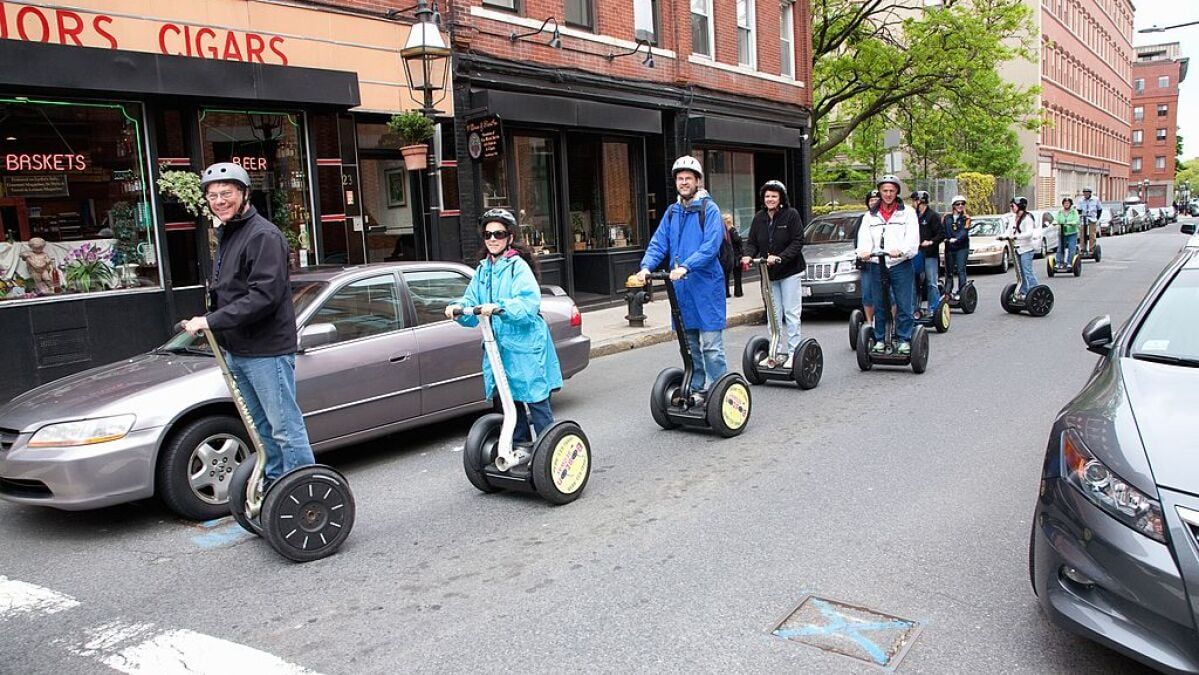
- Security guards and tour operators became the primary user base. Mall cops and tourist groups worldwide relied on Segways for mobility, making them ubiquitous in venues from Santa Monica to the Eiffel Tower.
- The Segway influenced an entire category of personal transport devices. Despite its jokes, the vehicle spawned electric unicycles, Onewheels, and hoverboards, with Segway now dominating the e-scooter market through acquisitions like Ford's Spin and Lyft partnerships.
Summarized by MalakyeAI