


Specialized files patent for a stiffer inverted fork design
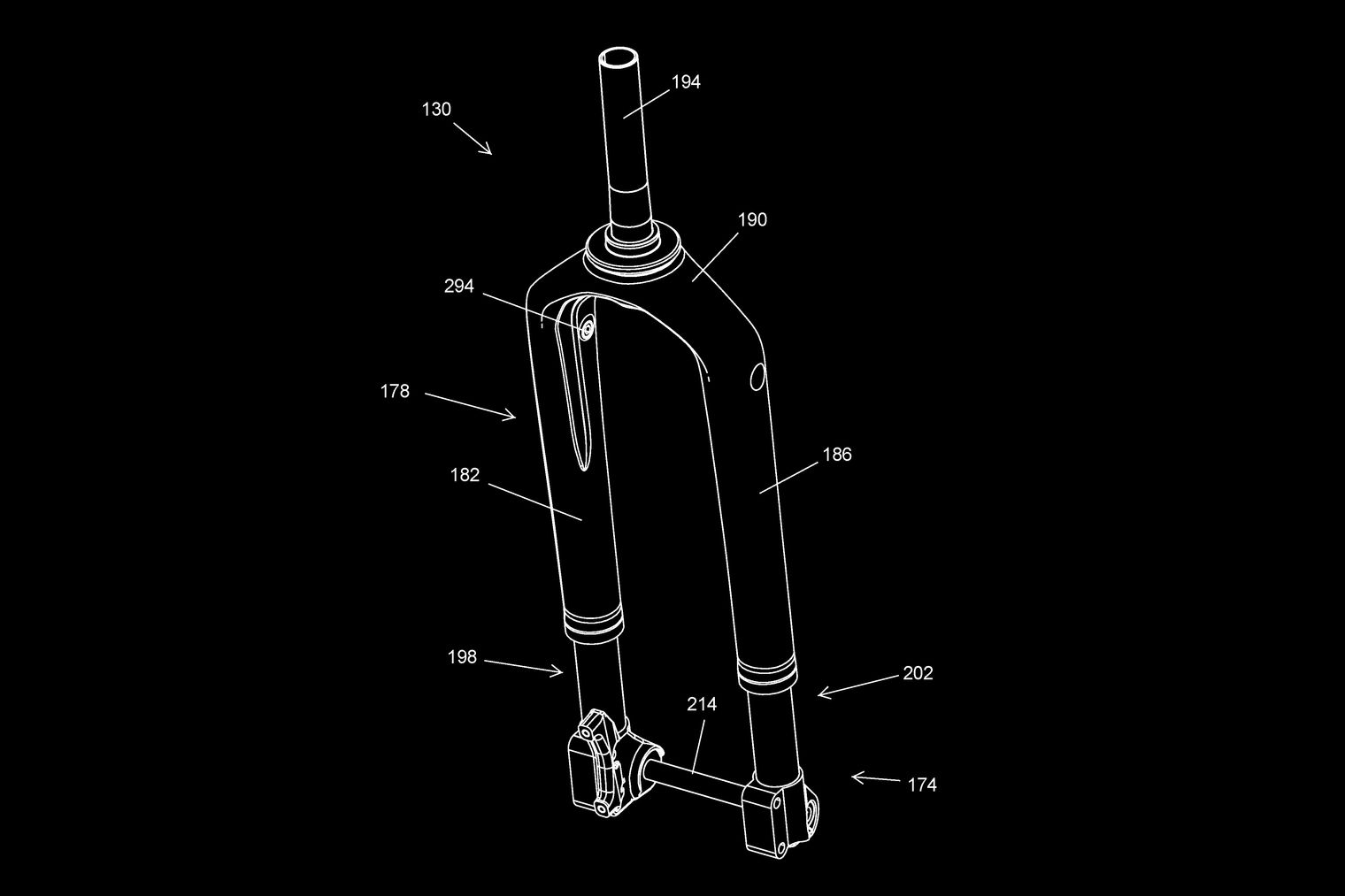
Specialized Bicycle Components has filed a patent application for an inverted suspension fork design that uses internal stiffening mechanisms to address torsional flex challenges. The design employs a bolted rod and keyed connection system inside each fork leg to prevent twisting under braking and steering loads. While patent drawings show an e-bike application, the filing suggests potential use across mountain, gravel, road, and hybrid bikes.
Key points
- Inverted forks offer smooth compliance but suffer from torsional stiffness limitations. Traditional forks use an arch connecting lower legs to prevent independent rotation, but inverted designs lack this feature since the space is needed for suspension travel.
- Specialized's patent details an internal rod system that prevents rotation without external bracing. The design uses a rod with a flat cross-section that passes through a keyed bushing, allowing vertical movement while blocking rotational movement.
- A cross bolt passes through the upper leg and into the rod's eyelet to lock it in place. According to the application, "the bolt hole can go through only the inside face of the leg, leaving nothing visible from the outside."
- The anti-rotation rod also serves as the suspension component carrying the piston. In some versions the rod handles both suspension duties and torsional bracing, while alternative designs separate these functions between the two legs.
- Patent claims cover both the bolted rod connection and the keyed bushing design independently. This allows Specialized to implement either feature separately rather than requiring both technologies in a single fork.
- Current patent drawings show an e-bike application, though the filing permits mountain bike use. The application notes the design could apply to "mountain, gravel, road, and hybrid bikes," though no guarantee exists the technology will reach production.
Summarized by MalakyeAI