


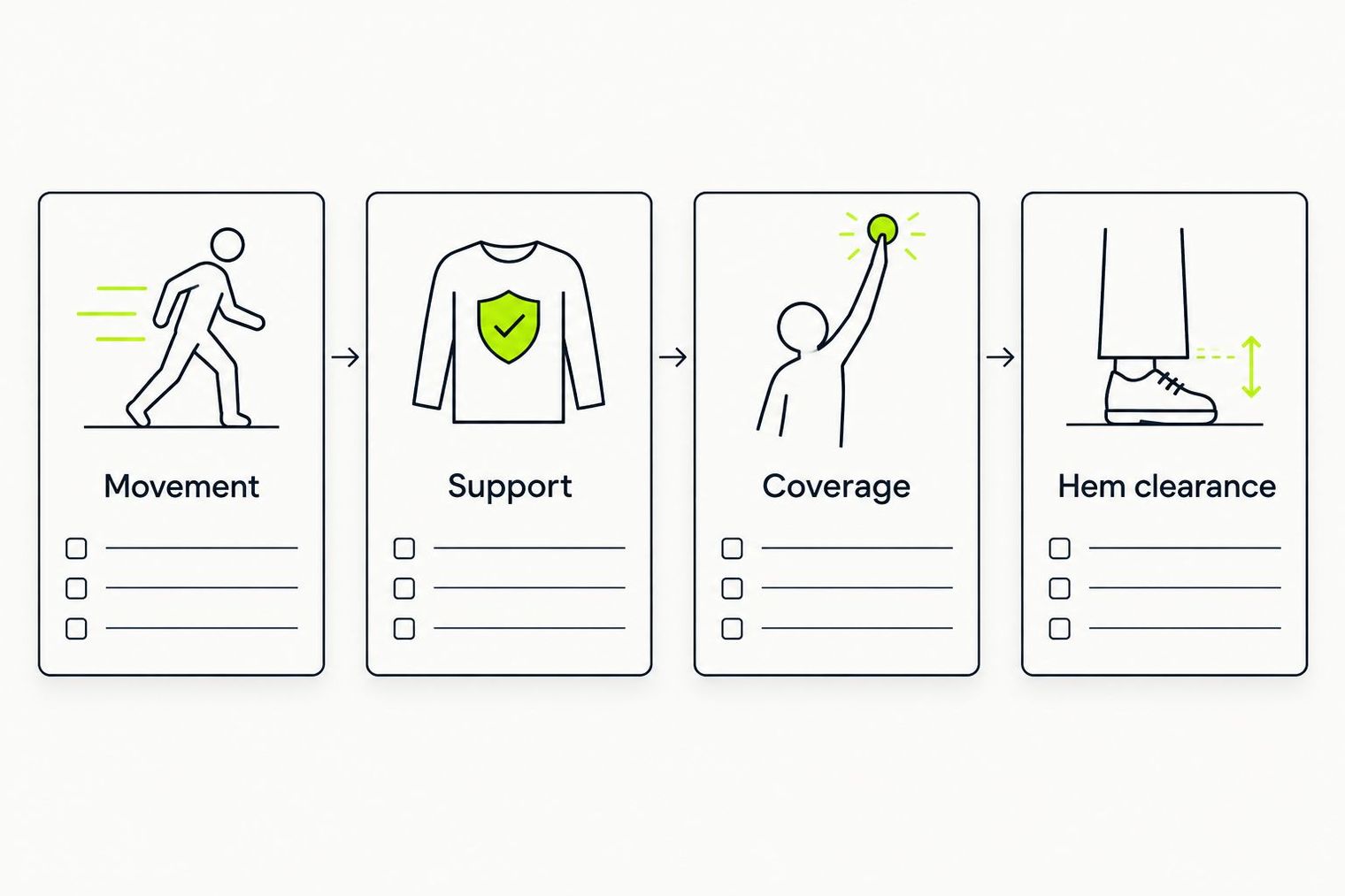
Dancers selecting activewear should prioritize choreography requirements, studio rules, and secure fit over appearance. This comprehensive guide explains how to choose leggings, shorts, tops, and layers that support unrestricted movement and clear body alignment during class and rehearsal. Testing garments through actual movement sequences—not just standing still—determines whether clothing will function properly in training.
Key points
- Class requirements must guide all activewear selection decisions. Studios may require specific leotards, tights, and footwear for technique classes, while open-format rehearsals allow dancers to choose their own silhouettes based on instructor preferences for floorwork and partner contact.
- Activewear must pass a movement test including overhead reaches, deep bends, and floor transitions. "An outfit that fits while standing still has not passed a dance fit test," and dancers should check waistband security, coverage from multiple angles, and hem clearance without adjusting between repetitions.
- Leggings and shorts require inspection of seams, pockets, and fasteners where the body contacts the floor. Fitted bottoms make leg alignment visible, while relaxed options create different silhouettes but need separate checks for ankle clearance and stability through choreography.
- Sports bra support is determined by performance during jumps and reaches, not neckline height or design details. Testing the bra and outer top together ensures the full outfit remains secure through torso rotation and forward folds without creating painful pressure or restricted breathing.
- Loose layers serve different purposes than rehearsal bases and should not hide alignment cues instructors need to assess. Oversized sleeves and hems require movement checks to confirm they do not cover hands during grip work or fall beneath feet during travel and turns.
- Building a functional rotation prioritizes garments that interrupt class over matching aesthetics. Recording simple fit notes after practice—such as waistband movement or seam discomfort—helps identify which pieces actually work in rehearsal rather than collecting individual garments that do not function together.
Summarized by MalakyeAI