


Modern sport UTVs are wider and faster, but their inward-positioned A-pillars make rearward visibility challenging. Proper mirror placement, size, and mounting design work together to create useful viewing angles. This article explains the engineering behind effective UTV mirrors across multiple platforms.
Key points
- Mirror position matters more than cage fitment alone. A mirror can fit the cage perfectly but still provide poor visibility if the cage blocks part of its reflective surface.
- Larger mirrors show more terrain while maintaining vehicle reference. The larger reflective area displays more of what happens beside and behind the machine compared to smaller mirrors from the same viewing position.
- Extended mirrors create leverage that mounting systems must resist. As mirrors move outward for better visibility, bumps and impacts gain more leverage against the mounting structure, requiring stronger mechanical engagement.
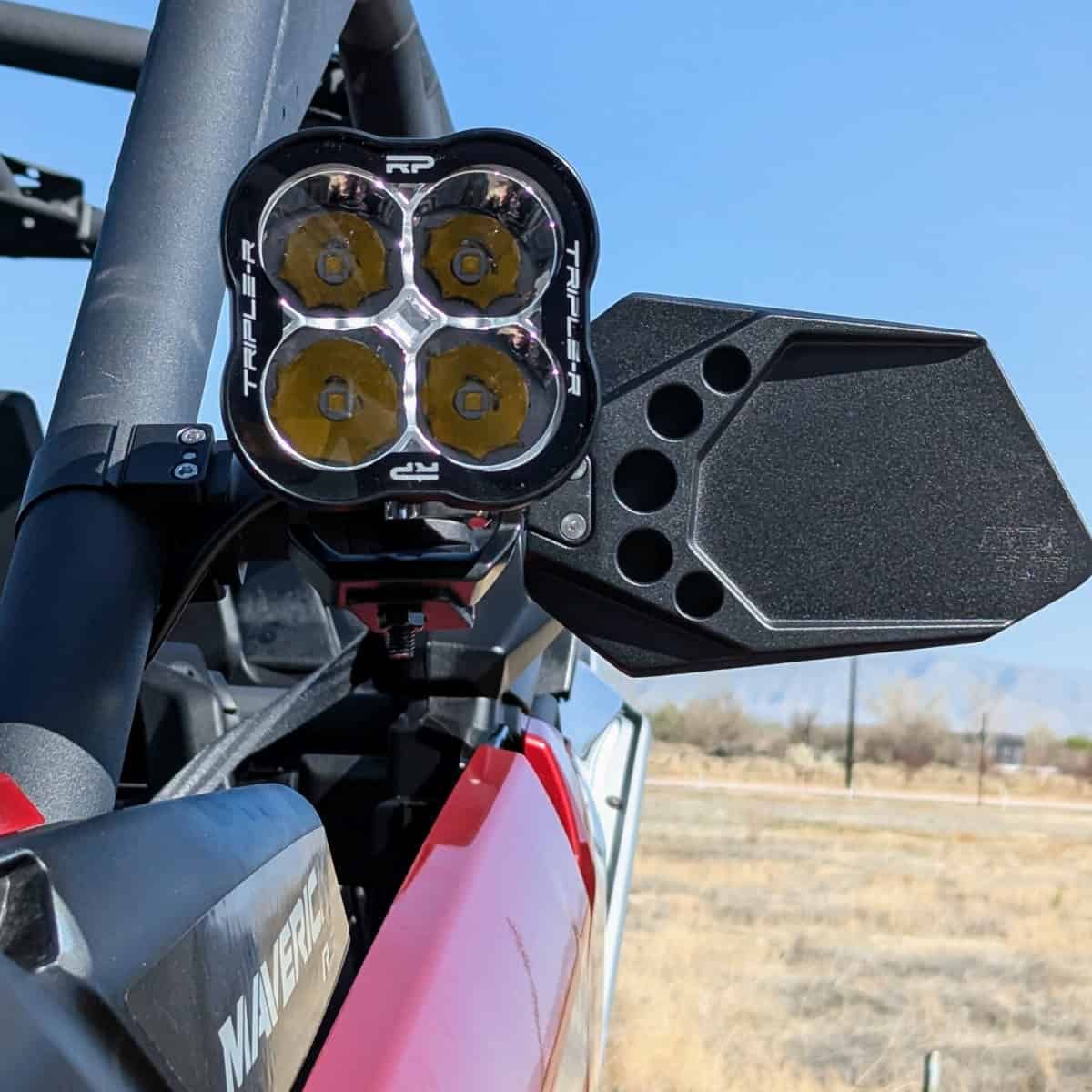
- Pod lights add weight that increases leverage on the mount. Adding accessories away from the cage creates additional load, which is why "one joint doesn't have to do everything."
- Mechanical indexing works better than friction alone for position retention. Mirror-01 uses indexed surfaces with teeth that physically engage each other rather than depending solely on clamping friction to resist rotation.
- Real-world installation verification matters more than compatibility claims. Physical testing on RZR, Maverick X3, KRX, Teryx H2, Talon, Z10, Villain, and Wolverine RMAX platforms reveals actual fitment and positioning before purchase.
Summarized by MalakyeAI