


Org Chart: How a Merchandise Planner at 5.11 Fits in the Puzzle

TL;DR
Org Chart Every job at a brand connects to a dozen others. The Org Chart column pulls one real job apart to show exactly how. Today: the Merchandise Planner at 5.11 , the person whose forecast quietly decides whether the company makes its number or leaves money on the floor.
Org Chart
Every job at a brand connects to a dozen others. The Org Chart column pulls one real job apart to show exactly how. Today: the Merchandise Planner at 5.11, the person whose forecast quietly decides whether the company makes its number or leaves money on the floor.
The job that sits on top of the money
A Merchandise Planner decides what gets made, in what quantities, and when it hits the floor. That is it, and that is everything. Get the forecast right and wholesale orders ship complete, ecommerce shelves stay full, and margin holds. Get it wrong in either direction and it shows up fast: over-plan and you are sitting on dead inventory that gets marked down to nothing; under-plan and you are stocking out, missing sales, and frustrating the retail partners waiting on product that never comes. At a brand like 5.11, where a firefighter or an officer actually needs the gear in stock, that forecast is not a spreadsheet exercise. It is the promise.
Trace the puzzle: whose work flows through you
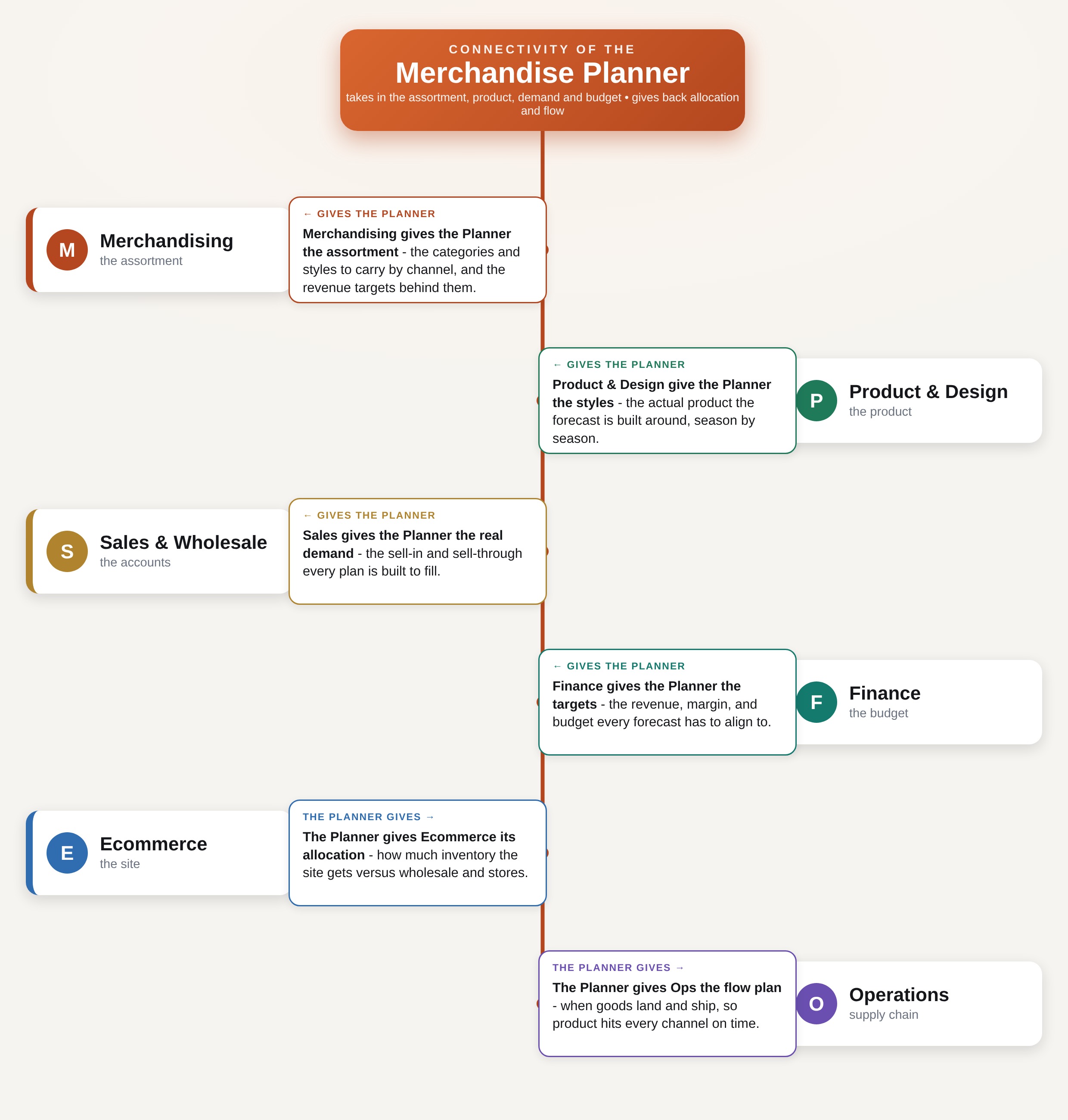
The real job description says it plainly: the Merchandise Planner partners with Sales, Merchandising, and Planning, and aligns everything to Finance. In other words, the planner is a translator. It takes in four inputs - the assortment, the product, the demand, and the budget - and turns them into two outputs the rest of the company runs on: allocation and flow. Here is how that connects, department by department:
What the planner takes in:
- Merchandising hands over the assortment - the categories and styles to carry by channel, and the revenue targets behind them. The planner turns that into unit and financial plans.
- Product & Design deliver the actual product - the styles and drops the forecast is built around, season by season.
- Sales & Wholesale bring the real demand - the sell-in and sell-through from accounts that the whole plan exists to fill.
- Finance sets the guardrails - the revenue, margin, and budget targets every plan has to align to.
What the planner gives back:
- Ecommerce gets its inventory allocation - how much stock the site holds versus wholesale and stores. Split it wrong and a hot SKU reads sold out online while a store sits on it.
- Operations & supply chain get the flow plan - when goods land and ship, which drives warehouse labor and every delivery window across channels.
Get it right and everyone wins; get it wrong and everyone feels it
This is the seat where a quiet miss becomes a loud problem three departments away. A too-aggressive forecast turns into a finance conversation about markdowns and a warehouse full of product ops has to move. A too-cautious one turns into a wholesale account that could not get stock and an ecommerce page reading sold out during the exact week demand spiked. Nobody sees the planner's good weeks. Everybody feels the bad ones. That is the weight of the job, and it is also the leverage: a planner who reads demand well makes merchandising, sales, ecommerce, ops and finance all look good at once.
Why this is one of the best seats in the building to learn from
Because everything crosses your desk. You see what customers actually want, what the brand can actually make, what money is available, and how every department depends on the others. Few jobs give you that full-board view this early. It is why planning is such a strong launchpad - planners move into senior planning and buying leadership, into merchandising and product strategy, into operations, and some of the sharpest general managers in this industry came up reading demand for a living. If you want to understand how a brand really works, this is the desk that teaches it.
See the whole board
If you are planning, buying, or in ops today, you are closer to this job than you think - you already touch part of the puzzle. Make the rest of it visible. Fill out your Malakye profile so the full picture of what you have touched is findable, keep your best work in shape, and watch who is hiring planners and buyers across the brands here. The planner who understands the whole board is the one who ends up running a piece of it.