


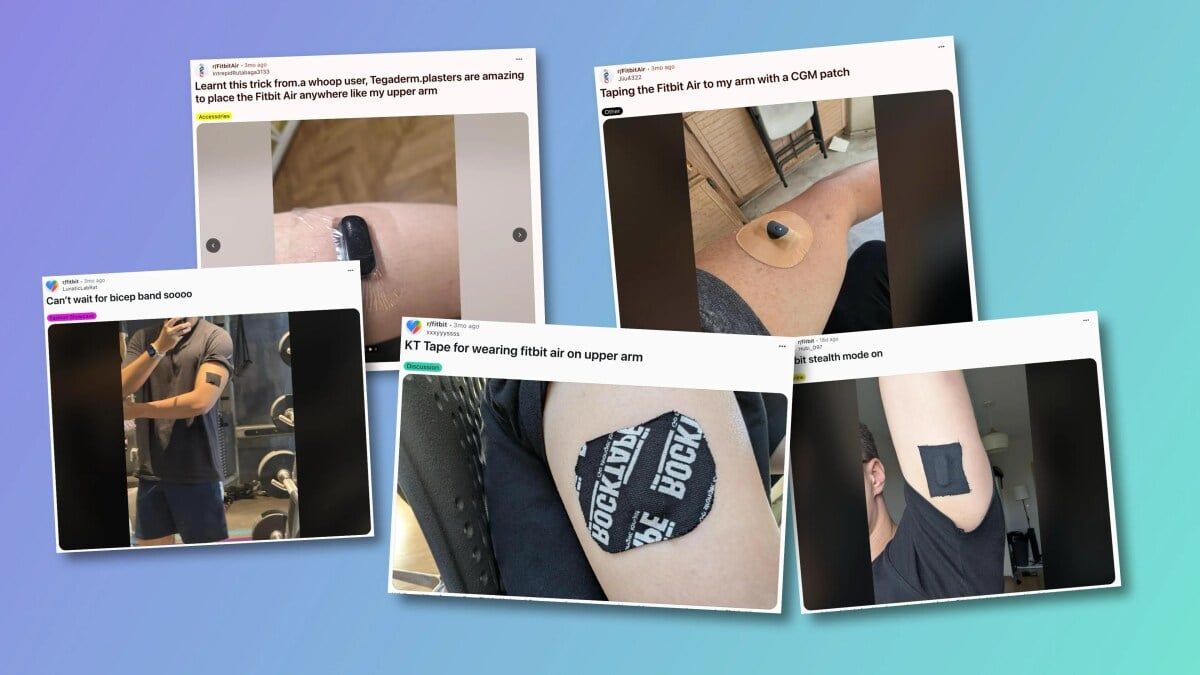
A Fitbit Air user experimented with taping the device to their upper arm using a CGM overpatch instead of wearing it on the wrist. The unconventional approach kept the tracker secure through workouts and showers while eliminating wrist obstruction. The method proved surprisingly effective for sleep and activity monitoring, though some limitations exist.
Key points
- Taping a Fitbit Air to the arm removes wrist interference. The device stays out of the way of wrist wraps, kettlebells, and various clothing styles without compromising functionality.
- CGM overpatches provide the most reliable adhesive solution. Unlike KT tape or athletic tape that can peel off after sweaty workouts, overpatch adhesive "is probably" the best option for securing a Fitbit to skin for extended periods.
- Heart rate accuracy improved with arm placement under the patch. The snug contact against skin and blocked ambient light enhanced readings, though results may vary depending on individual blood vessel distribution.
- Automatic workout detection showed mixed results with arm placement. The Fitbit's motion sensors are calibrated for wrist movement, so the device "didn't auto-detect" the user's initial jog but worked better when manually started.
- The user frequently forgot they were wearing the device. Set-and-forget convenience exceeded even dedicated ring trackers, with notifications from the health app prompting the realization "Oh, right, I'm still wearing the Fitbit!"
- Removal and charging logistics presented practical challenges. Strong adhesive required a warm shower for safe removal, and the weekly cost of replacement patches may offset savings from not buying specialized wristbands.
Summarized by MalakyeAI