


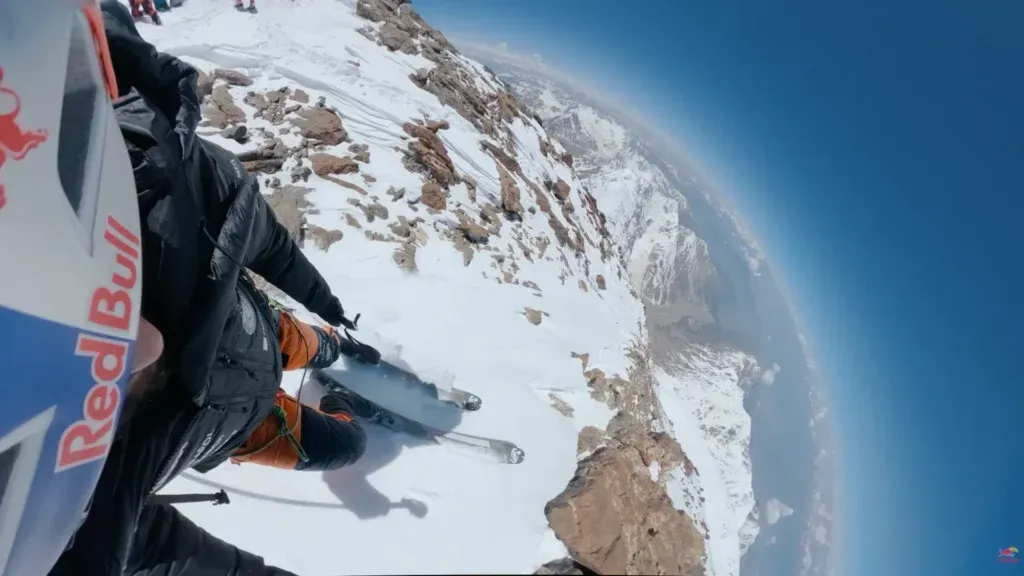
Andrzej Bargiel completed the world's first continuous ski descent of Nanga Parbat, descending from summit to snowline without removing his skis or using supplemental oxygen. The 8,126-meter peak is considered one of mountaineering's most challenging objectives, with few documented ski attempts. Bargiel's achievement required navigating treacherous terrain including a permanent serac barrier that typically forces climbers to detach from their equipment.
Key points
- Bargiel skied unbroken from Nanga Parbat's summit to the snowline. Previous descents required climbers to remove skis while navigating the dangerous upper Diamir Face, a permanent serac barrier prone to avalanches.
- No supplemental oxygen was used during the entire ascent and descent. This constraint forced Bargiel to spend only 45 minutes at the summit before beginning his descent, as he could not safely remain in the Death Zone above 7,900 meters for extended periods.
- Nanga Parbat remains largely uncommercial compared to peaks like Everest. The mountain has no established infrastructure or commercialized routes, making summit attempts rare and highly technical endeavors requiring specialized skills.
- Hans Kammerlander and Diego Wellig completed the first known ski descent in 1990. While several others have since skied the mountain, none had previously completed the entire descent from summit to snowline without removing their skis.
- Bargiel required precise timing and favorable mountain conditions for success. He stated, "I knew that the success of this project would depend on the right timing and the right conditions in the mountains."
- The ascent began June 29 with careful route selection to ensure safety. Bargiel said, "I'm happy that we were able to find a line that made it possible to complete the entire descent safely."
Summarized by MalakyeAI