


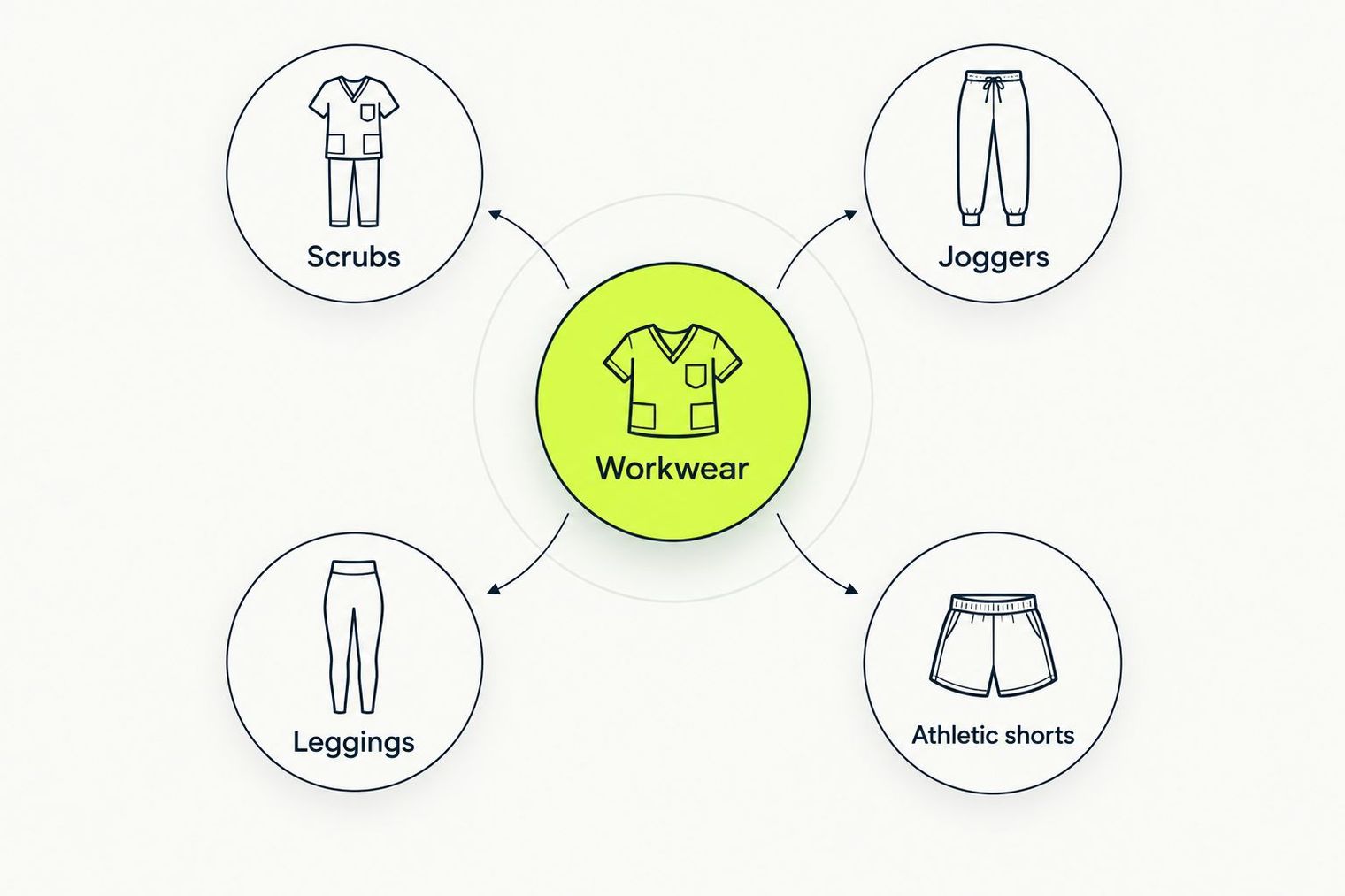
Physical therapists need activewear that prioritizes movement, coverage, and workplace compliance over gym styling. This 2026 guide addresses how to select bottoms, tops, layers, and pockets suited to patient-facing clinical duties. Start by confirming your workplace dress policy, then test existing outfits through realistic work movements before purchasing new pieces.
Key points
- Workplace dress policy must be confirmed before comparing clothing options. Ask your manager for written guidelines distinguishing patient care, administrative work, demonstrations, and community visits to remove unsuitable categories.
- Test existing outfits through five practical movements: squat, lunge, kneel, hip hinge, and overhead reach. Check waistband stability while sitting and standing, and watch for shirt lift, thigh pulling, and seam discomfort during the movement sequence.
- Joggers offer a less body-contouring alternative to leggings for clinics permitting athletic pants. Fit depends on how the garment sits on your body, not on high-rise design alone, so assess coverage while bending under normal lighting.
- Tops must maintain appropriate coverage during forward bends and overhead reaches, not only between tasks. Check neckline and hem behavior from the side view, and confirm that underlayer visibility meets workplace requirements.
- Pocket placement matters more than pocket count for carrying work essentials securely. Test pockets with the actual items you carry and verify contents do not shift, press awkwardly, or restrict sitting and kneeling.
- Build your rotation around care label requirements and realistic laundering schedules. Plan three outfit combinations as a framework, inspect seams and waistbands before each wear, and replace unsuitable pieces individually rather than rebuilding your entire wardrobe.
Summarized by MalakyeAI