


How Much Does It Cost to Manufacture Clothes? An Honest, Transparent Breakdown
By Bryden
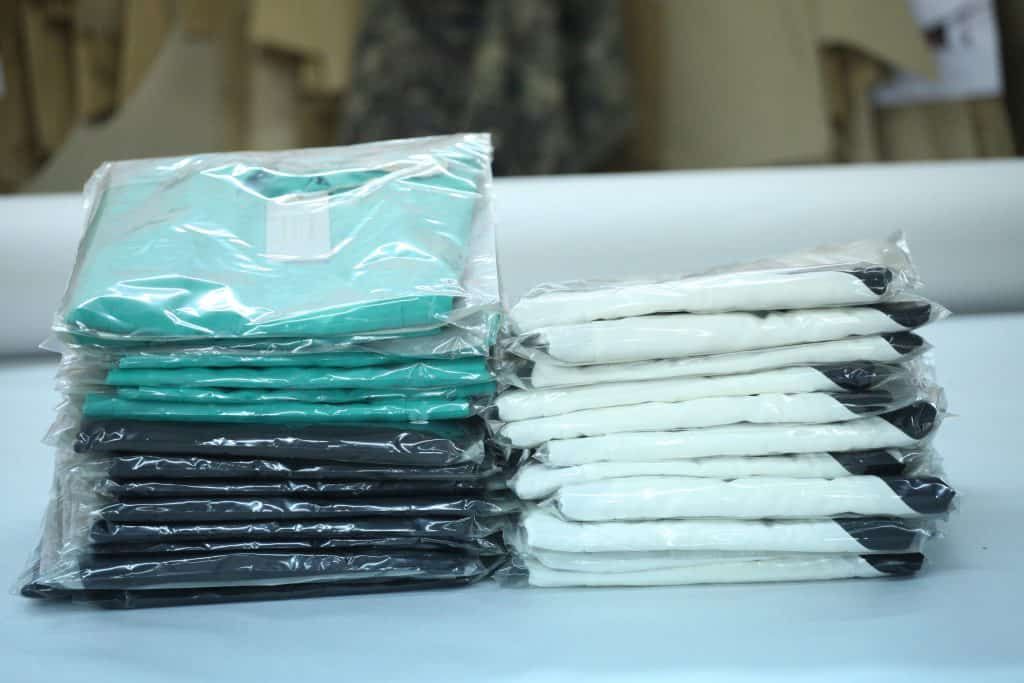
Clothing manufacturers rarely publish transparent pricing, but manufacturing costs follow consistent variables that new brands can learn to estimate accurately. Fabric represents the largest expense, typically accounting for 40-60% of unit cost, while construction complexity, order volume, and location also significantly impact final pricing. Understanding these factors allows brands to budget first production runs without surprises.
Key points
- Fabric is the single biggest cost driver in clothing manufacturing. Fiber type, weight measured in GSM, construction method, and special finishes like water resistance determine fabric expenses, which typically represent 40-60% of total unit cost.
- Construction complexity directly increases labor costs through sewing time. A basic t-shirt with minimal seams costs less than technical jackets with multiple panels, zips, and bonded seams, as "every design detail that adds sewing steps adds cost."
- Order volume significantly reduces per-unit manufacturing expenses. The biggest cost breaks occur moving from 100 to 300 pieces and from 300 to 500 pieces, with fixed costs like pattern making spreading across more units at higher volumes.
- Real per-unit benchmarks from China manufacturing range widely by garment type. Basic t-shirts cost $6-9, pullover hoodies $15-19, zip hoodies $16-20, and technical activewear jackets $25-33 at standard minimum order quantities of 80-100 pieces.
- A realistic first production run requires budgeting beyond per-unit costs. For a 150-piece pullover hoodie order, total landed costs including tech pack development, sampling, shipping, and inspection average approximately $3,720, or $24.80 per unit.
- Manufacturing location affects pricing by 2-5 times the China baseline. China offers the best price-to-quality combination, Portugal costs 2-3x more with shorter lead times, and US manufacturing is "the most expensive option by a significant margin."
Summarized by MalakyeAI