


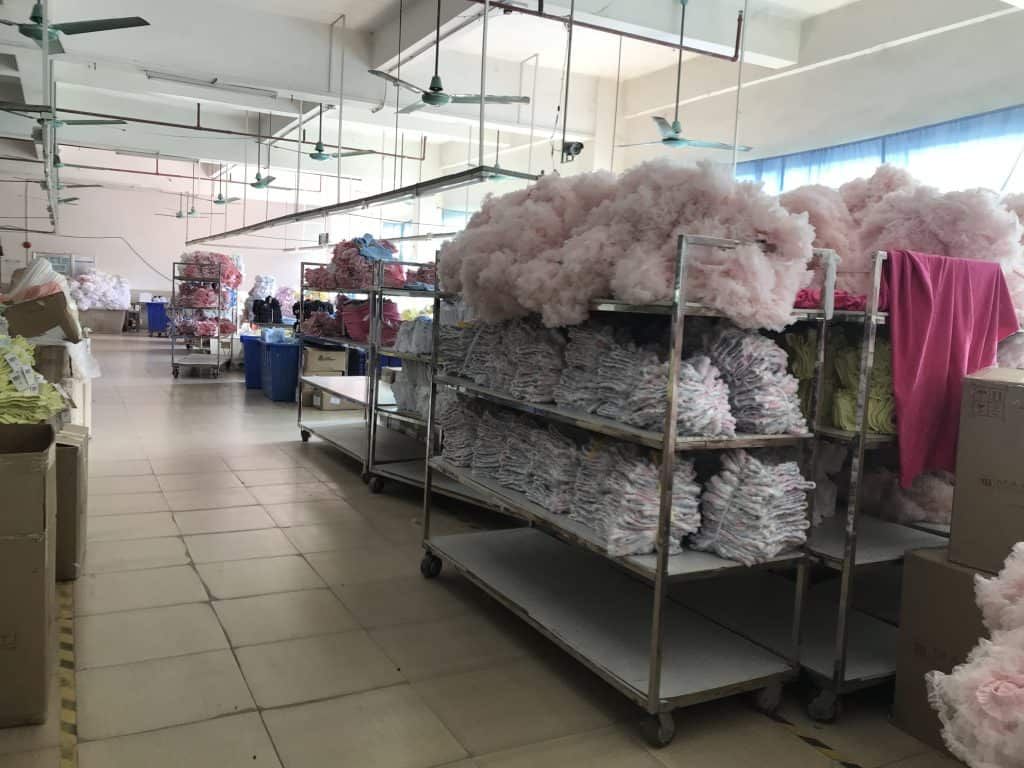
Minimum Order Quantity, or MOQ, represents the smallest number of units a factory will produce per order. For early-stage clothing brands, MOQs often become a major barrier to production, with factories frequently demanding 500+ pieces while brands want far fewer. Understanding MOQ's structure and negotiation tactics significantly improves a brand's chances of securing workable manufacturing terms.
Key points
- MOQ exists because factories have fixed production costs regardless of order size. Pattern making, machine setup, fabric cutting, and mill minimums must be spread across enough units to remain profitable; cutting 100 units of jersey knit wastes 20% of fabric versus 10-15% for 1,000 units.
- Three distinct MOQ types exist: per style, per colourway, and per size. Per style MOQ requires a minimum for each garment design; per colourway requires a minimum per colour within a style; per size requires minimums for individual sizes, and "many factories advertise a 300 pieces MOQ without clarifying" which type applies.
- Typical MOQ ranges vary significantly by factory type and location. Large Chinese export factories require 500-1,000 pieces per style, mid-size factories 200-500 pieces, small batch specialists 50-200 pieces per colourway, and print-on-demand services have no MOQ but charge higher unit costs.
- Unit costs drop substantially as order quantities increase, with the steepest savings between 100-300 pieces. An 80-100 piece order costs approximately $18-20 per unit for a standard hoodie, while 500+ pieces cost $13-17, with savings becoming incremental beyond 500 units.
- MOQ is negotiable when brands offer compelling alternatives to lower volumes. Effective tactics include accepting higher unit prices, consolidating styles into one fabric, combining colourways into single orders, or committing to reorder schedules within 90 days.
- Brands unable to meet factory MOQs have three realistic options available. Find factories with lower minimums, combine orders with another brand to split the minimum, or pre-sell products through waitlists or crowdfunding before production begins.
Summarized by MalakyeAI