


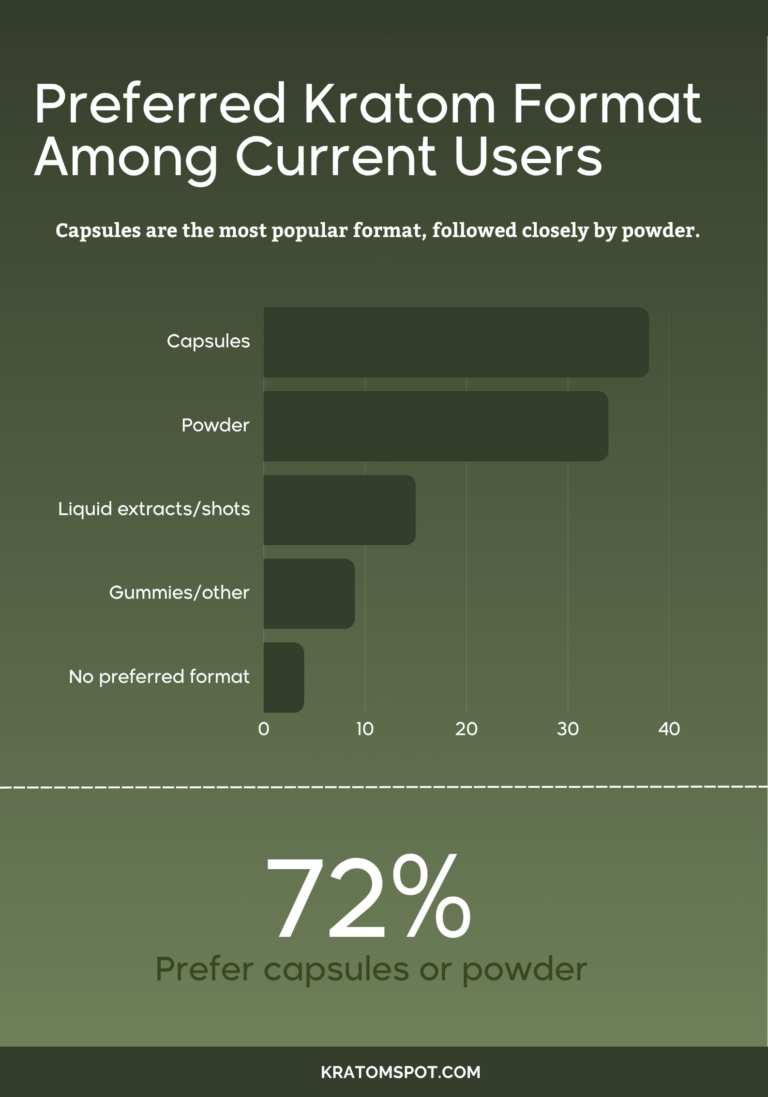
Kratom consumers can choose between powder and capsules, two popular formats containing the same leaf material but offering different experiences. A 2026 Kratom Spot survey found 72% of users prefer one of these formats, with capsules ranking slightly higher. The right choice depends on individual preparation preferences, portability needs, taste tolerance, and budget considerations.
Key points
- Kratom powder is made by drying and grinding mature kratom leaves into fine material. It can be mixed into liquids, prepared as tea, or added to foods, offering users flexibility in preparation and serving size control.
- Kratom capsules contain pre-portioned powder inside gelatin or vegetable-based shells. They eliminate most preparation steps and help mask kratom's naturally bitter, earthy flavor.
- Product strength and concentration ranked as the most important selection factor at 28%. Convenience and price tied for second place at 21% each among survey respondents.
- Loose powder typically costs less than capsules because it requires no individual capsule manufacturing. Capsules may command higher prices, but some users consider the added convenience worth the expense.
- Capsules provide major advantages for people who dislike kratom's taste. The shell prevents contact with the powder while swallowing, whereas powder retains "full earthy and bitter flavor" unless mixed into masking foods or beverages.
- Fifty-five percent of users consistently selected the same format, while 37% switched depending on situation. Many maintain powder at home for everyday value while carrying capsules for work, travel, or away-from-home use.
Summarized by MalakyeAI