


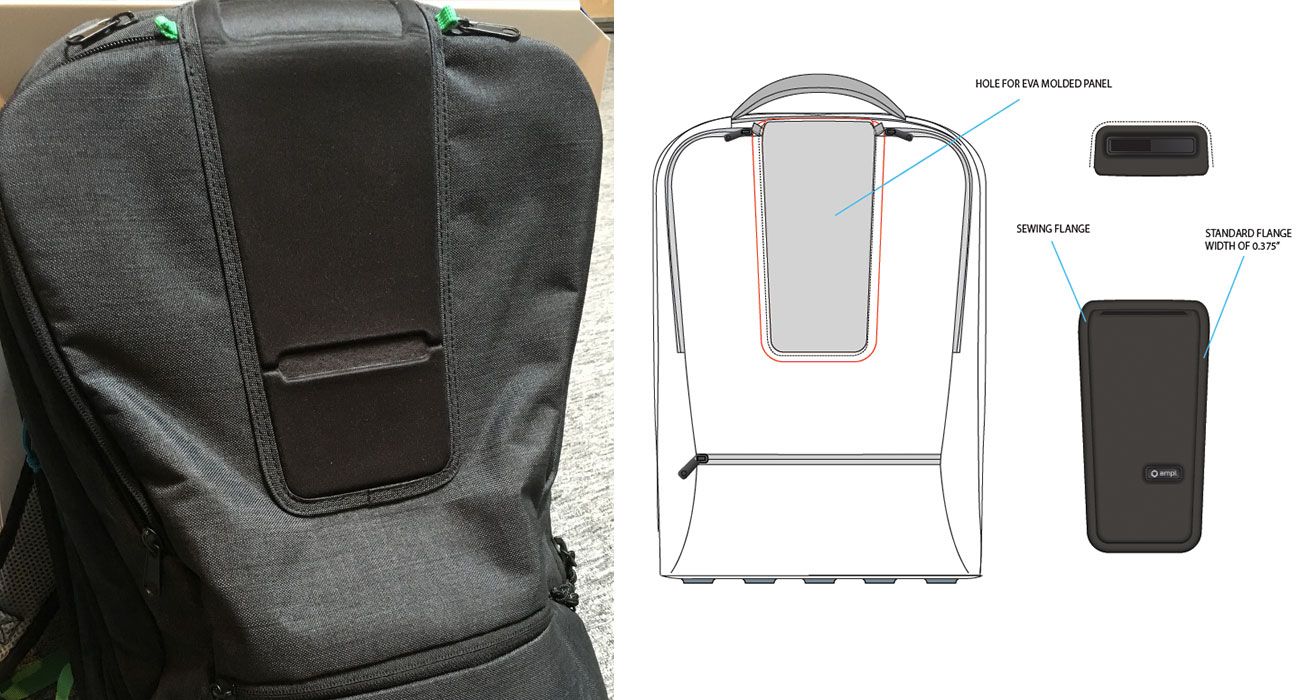
Hardware startups developing wearables often focus on electronics and rigid components first, then treat textile integration as an afterthought. This approach frequently creates problems because soft goods and hard goods behave fundamentally differently under movement, force, and manufacturing variation. Successful integration requires resolving the interface between rigid and flexible systems from the beginning.
Key points
- Soft-to-hard integration combines flexible materials with rigid electronic components. Examples include sensors mounted in compression garments, electronic modules attached to harnesses, batteries in sewn pockets, and control units built into medical wearables.
- Rigid parts maintain precise dimensions while soft goods are inherently dynamic. Fabric stretches, compresses, and changes shape under load, while foam compresses over time and elastic loses recovery, creating different behavior than enclosures.
- The interface between hard and soft components is itself a critical design problem. This transition must distribute weight, prevent pressure points, hold sensors in position, protect cables from flex fatigue, and survive repeated assembly cycles.
- Hardware startups should determine early if electronics need to be removable. If textiles must be washed separately, removability influences the enclosure design, connector strategy, access openings, and retention systems.
- Cable routing and protection must account for body movement, not just static placement. A cable that works on a table may become visible, restrictive, or irritating when placed against a moving body.
- One team should own final system integration and coordinate across disciplines. "Skipping directly from a rendering or enclosure CAD model to factory sampling usually pushes unresolved design decisions into the sample room."
Summarized by MalakyeAI