


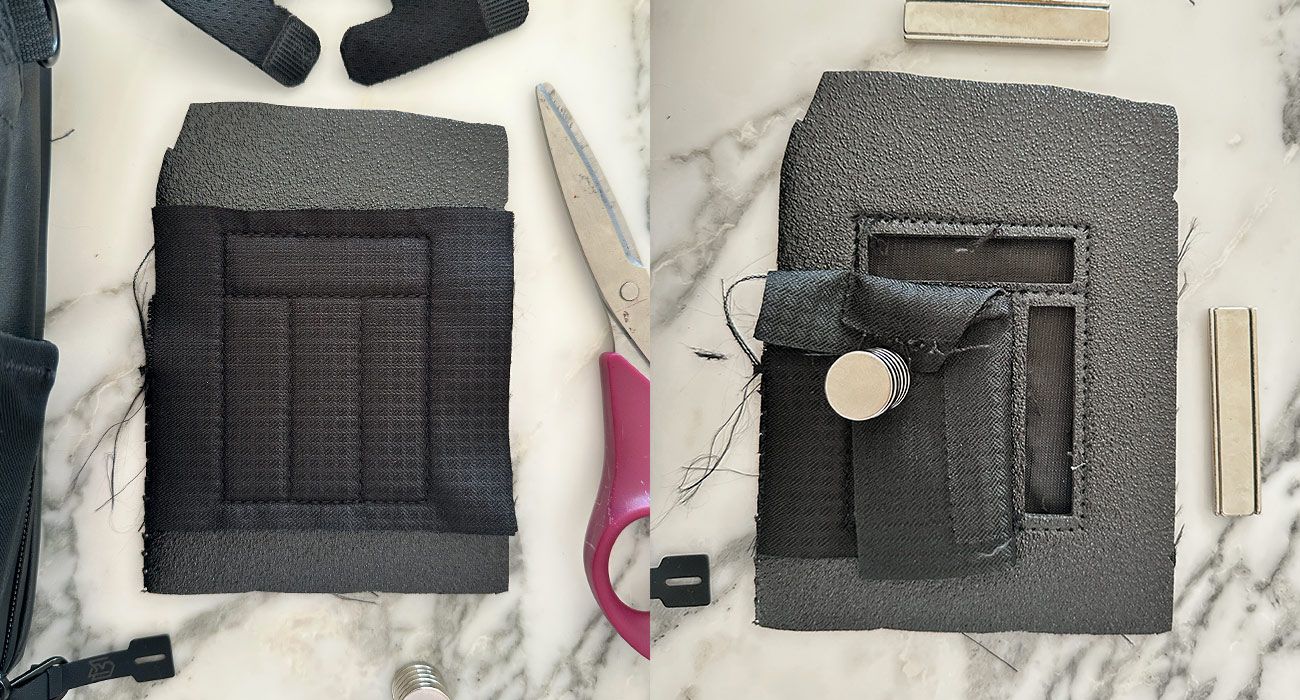
Designing magnetic closures for soft goods requires careful planning before prototyping to account for how magnets behave when integrated into fabric, layered materials, and real-world use. Developers must define the closure's function, material stack, loading directions, and attachment methods while evaluating safety, care requirements, and component sourcing. Early focused trials using representative materials and intended conditions help identify issues before committing to a full sample.
Key points
- Define the closure's specific function before selecting a magnet. Consider whether it holds a lightweight pocket flap, secures a loaded compartment, or positions a removable panel, and identify the intended user and operating conditions. Alternatives like zippers or snaps may better suit the required function.
- Distinguish between magnetic attraction and mechanical locking systems. Magnet-to-magnet closures rely on attraction through layers, while magnetic-mechanical fasteners like FIDLOCK combine magnetic guidance with a mechanical lock that requires separate evaluation.
- Account for how the material stack affects magnetic performance. "Magnets can work through fabric, but separation reduces pull force," meaning developers must evaluate the complete layered assembly including shell fabric, lining, reinforcement, and enclosures rather than bare components.
- Evaluate loading and release directions separately from pull-force specifications. Direct pulls, sideways forces, peeling actions, and flexible panel deformation create different stresses that should not be treated interchangeably when designing the closure geometry.
- Resolve attachment, reinforcement, and containment before prototyping. Follow the selected component's specific assembly instructions, define how each part connects to the product, and verify that protective barriers prevent needle damage and long-term containment failure.
- Address safety, care, and sourcing requirements early in development. Review cleaning limitations, medical device interference risks, child safety hazards from detached magnets, and confirm component availability, part numbers, and assembly repeatability before building the complete prototype.
Summarized by MalakyeAI