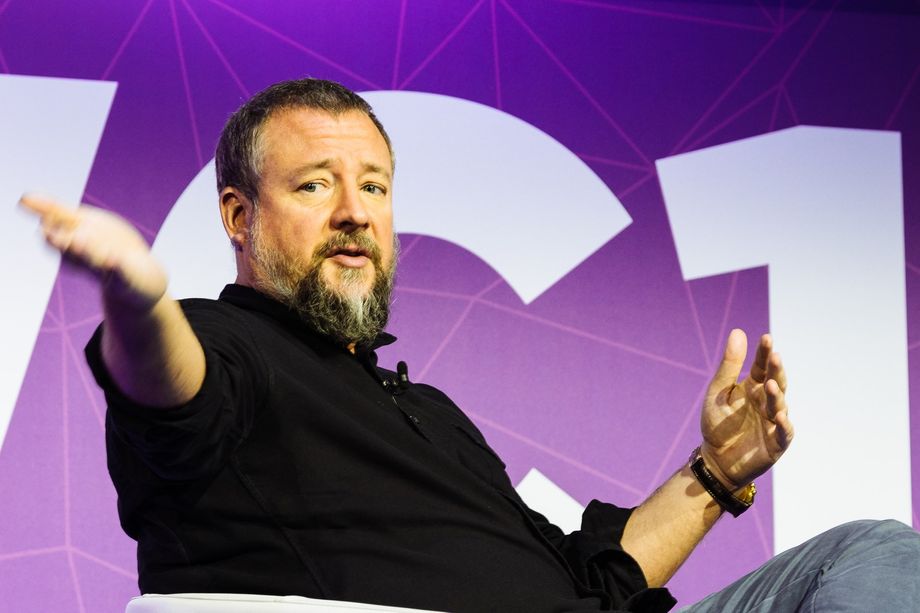
Above: Vice co-founder Shane Smith. Photo by Stefan Schäfer, Lich via Wikimedia Commons, licensed CC BY-SA 4.0, resized. Information Leak Here is a story that sounds made up and is not. One of the most influential media brands of the last thirty years, a company that at its peak was valued at five point seven billion dollars and whose founder was a paper billionaire, started as a free magazine funded by a Canadian government welfare program. That is not a metaphor. Vice began on a welfare-to-work grant in Montreal, became the loudest voice of a generation, and then, coke and cash and hubris and all, went completely bankrupt. Here is how it happened, and why it matters to anyone who builds a brand in this world. It started on welfare in Montreal In 1994, a recovering heroin addict named Suroosh Alvi took a job at a tiny Montreal startup magazine called the Voice of Montreal. It was not a cool indie project. It was a publicly financed publication created under a welfare-to-work program, designed to give unemployed young people something to do and a reason to get up in the morning. Alvi brought in his friend Gavin McInnes, a tree planter and cartoonist, to edit it. McInnes brought in his childhood friend Shane Smith, a punk kid with a big mouth and a talent for selling, to move advertising. Three broke guys and a government grant. That was the whole thing. They started writing about the stuff nobody in respectable media would touch. Punk, drugs, rap, skate culture, sex, all of it shot with raw, provocative photography and a voice that talked to Generation X like an actual human instead of a focus group. It was ugly, funny, honest, and completely unlike anything on the newsstand. And it worked, because it was real. Why they called it Vice Here is the detail people love. In 1996 the three of them broke with the original publisher, Alix Laurent, and bought the magazine out from under the program that birthed it. They needed a new name, and they did the simplest, most on-brand thing imaginable. They took Voice and dropped the o. Voice became Vice. It was perfect. Vice is a buzzword for sin, for bad habits, for the things you are not supposed to do. It captured everything the magazine already was, punkish, indulgent, a little dangerous, and it drew a hard line between them and the polite media they were rebelling against. One deleted letter turned a welfare pamphlet into a countercultural flag. The name was the brand, and the brand was an attitude. The rise: from skater zine to media empire What happened next is one of the great growth stories in modern media. Vice rode its authenticity out of the zine world and into everything. It went from print to the web, then into video with VBS and later a full cable channel, then into documentaries and an HBO show. It sold the one thing legacy media could not manufacture: genuine access to youth culture, the same culture that powers skate, surf, music, and streetwear. The money followed the cool. Disney and Fox and the private equity group TPG all bought in, with TPG alone putting in four hundred and fifty million dollars. In 2016 Disney offered three and a half billion dollars to buy the company outright, and Shane Smith turned it down. He was betting on more. By 2017 Vice was valued at five point seven billion dollars, and Smith, the punk kid who once sold ads for a welfare magazine, landed on the Forbes billionaire
Malakye Editor
Aug. 7, 2026 · 5 min read